---
After the Files

The Epstein files surfaced again that morning—names, counter-names, outrage neatly packaged for breakfast reading. By the time I reached the golf course, the scandal had already travelled ahead of me.
Someone mentioned it near the clubhouse. Someone else dismissed it as political theatre. The usual polarisation followed.
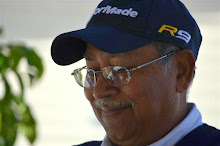
Rathore, my regular golf partner, said nothing until we had finished the round and settled down with tea. He had the habit of letting noise exhaust itself.
“You know,” he said finally, “people think the files created the sickness. They didn’t. They only confirmed it.”
I looked at him. “You sound unsurprised.”
“That’s because I’ve smelt it before,” he said. “Long before it had a name.”
---
“I was in Paris in 2002,” Rathore began, “when Epstein was alive but invisible. No files, no headlines. Just… arrangements.”
He spoke of a dinner with a senior multinational executive—Thomas, he called him. Polished, reasonable, persuasive in the way only people with nothing to fear can be.
“Over wine,” Rathore said, “he explained power without drama. According to him, the elite didn’t break laws. They designed lives where laws rarely intruded.”
Private retreats. Discreet hospitality. Guests who arrived without appearing to have travelled.
“At the time,” Rathore said, “I dismissed it as European arrogance.”
---
“Years later,” he continued, “on an early morning Indian Airlines flight to Delhi—Executive Class—I heard the same philosophy spoken again, though with a local accent.”
Somewhere over central India, the man beside him mentioned S.—just the initial.
“Everyone knows him,” the man said. “Even those who haven’t met him.”
S., Rathore was told, didn’t sell influence. He provided geography. Farmhouses scattered across the country, places where phones lost signal and explanations were unnecessary.
“In America,” the man said lightly, “they needed islands. In India, land was enough.”
By the time tea arrived, they were discussing cricket.
---
Rathore paused. “I saw the same pattern again near Gwalior.”
A respectable gathering. Professionals. No secrecy. Someone mentioned a piece of land outside the city.
“Neutral ground,” another said.
No one asked neutral for what.
“That’s when it became clear,” Rathore said. “This wasn’t about people. It was about design.”
---
Listening to him, my mind went back to Jeffrey Archer’s Clifton Chronicles, which I had read years earlier. There, manipulation moved effortlessly across continents, institutions, and generations. Decisions felt organic to those affected, but every outcome had been quietly positioned in advance. Nothing was illegal; nothing shouted; yet everything was engineered.
At the time, I had admired Archer’s craft while reassuring myself it was fiction.
Now, with Epstein files dominating headlines and Rathore’s recollections filling the gaps, Archer’s technique felt less imaginative and more observational.
“In Archer’s world,” I said, “manipulation didn’t shout. It arranged the room so the outcome was unavoidable.”
Rathore nodded. “Exactly. Power never pushes. It positions.”
---
The clubhouse hummed around us. Outside, the fairway lay calm and perfectly maintained, betraying no sign of the planning beneath it.
“When the Epstein files came out,” Rathore said quietly, “people were shocked by the names. They shouldn’t have been. Names are footnotes.”
He stood up, adjusted his cap.
“Files appear late,” he said. “Systems appear early. And by the time files are debated, the system has already relocated.”
As he walked away, I realised what had been troubling me all along.
The files were not revelations.
They were confirmations.
Like an Archer plot revealed in the final chapter, the outcome seemed shocking only to those who hadn’t noticed how carefully the stage had been set.
---

4 comments:
Very very timely subject, succinctly expressed... 👌
Great message : the elite didn’t break laws. They designed lives where laws rarely intruded.
I also have a great liking for Jeffrey Archer right from the days of "not a penny less, not a penny more" to "kane and abel".
Great contribution. Kind regards
Thanks dear Subhedar for your comment!
Thanks dear Vijay, yes Archer has been my favourite since long and to me Epstein file is a classic Archer plot!
Post a Comment