
Mr. Dharangdharia, the Chief Engineer of GEB at Wanakbori during 1987–88, was a man who could make boilers tremble and engineers behave like well-disciplined schoolboys. A tough exterior, clipped words, and a reputation that travelled faster than official memos—naturally, everyone kept a safe distance. Everyone except me.
For reasons best known to him (and perhaps my persistence in planning), he began relying on me for the 5th and 6th units of 210 MW each. That trust became my lever. While others hesitated, I quietly used his authority—like a borrowed sword—to ensure State Board engineers delivered enabling facilities on time. The result? Milestones that today would still invite applause: full load within 24 hours of first synchronisation, with all auto-loops, HP heaters—everything behaving like a well-rehearsed orchestra. No jugaad, pure performance.
But Dharangdharia was not just a taskmaster. Beneath that कठोर आवरण was a man of surprising warmth. One day, he announced, “Roy, I am going to Sikka Thermal. Car is going. You and Madhuri are coming.” That was less an invitation and more a command performance.
The Road Trip Begins
We set off—about 130 km—with him occupying the front seat, legs stretched like a Western gunslinger, occasionally turning back to talk.
At one point he said in a gruff, half-chewed accent: “Roy… you see… in life… you must shoot first… then talk.”
I burst out laughing. He was clearly channeling .
I replied, “But sir, in project management, if you shoot first, audit will shoot back.”
He chuckled, “Then you better be Clint Eastwood!”
The Ahmedabad Surprise
Our first halt was Ahmedabad, at the residence of a certain Lalbhai. The ladies disappeared inside, leaving Dharangdharia and me in the drawing room.
The moment I entered, I felt something unusual—cool, controlled air. In 1988, a fully air-conditioned drawing room itself was a statement. But the real shock was yet to come.
Dharangdharia leaned back and said dramatically, “Roy… get up… and look properly.”
I obeyed.
What I saw made me forget my engineering calculations. The walls were adorned with original works—not reproductions—of masters like , , … and then, almost unreal, European legends—, , .
I must have looked like a villager seeing electricity for the first time.
Lalbhai smiled and explained, “This room is air-conditioned 24 hours—for them, not for us.”
At that moment, I realised something profound: these paintings were not decoration; they were living heritage. Each canvas carried not just colour, but centuries of thought, rebellion, and human emotion. In engineering we measure megawatts—here, value was measured in imagination.
Mentally, of course, I was already converting each painting into crores of rupees!
Lunch with Royal Cows
Next halt—a roadside resort designed like a rustic village. We had a typical Gujarati meal—rotla, dal, sabzi, kadhi—simple, yet deeply satisfying. I have always believed: simplicity, when done right, is the ultimate sophistication—like a perfectly made dal.
But the real attraction came after lunch.
The owner proudly took us to his cowshed.
Now, I have seen cows all my life, but this was something else. Jersey cows—imported lineage, carefully bred in India, especially by enterprising Gujaratis—stood like VIP guests. Each cow had fans, air coolers, and better ventilation than most government offices.
“Thirty kilos of milk per day,” the owner declared.
I looked at Dharangdharia and whispered, “Sir, even our boilers don’t give this efficiency.”
He replied in his Western tone, “Roy… this is not cow… this is milk factory.”
These Jersey cows, introduced and popularised in India largely by progressive dairy farmers in Gujarat, revolutionised milk productivity. High yield, controlled diet, temperature management—this was dairy engineering at its finest.
Another entry into my “knowledge bank,” as I like to call it.
Dwarka: Where Time Stands Still
During that trip, we also visited .
Standing by the Arabian Sea, Dwarka felt less like a city and more like a memory frozen in time. The wind carried the smell of salt and mythology. Believed to be the ancient kingdom of Lord Krishna, the town has an aura where history and faith merge seamlessly. The Dwarkadhish Temple rises with quiet dignity, and the rhythmic sound of waves feels like an eternal chant. For a man immersed in turbines and transformers, this was a different kind of power—spiritual, intangible, yet deeply grounding.
Wind and Vision at Okha
We also visited the early wind farm at —one of India’s first experiments with harnessing wind energy. Those turbines, primitive by today’s standards, stood like symbols of a future India—clean, innovative, and forward-looking.
The Man Behind the Myth
The most memorable part, however, was Dharangdharia himself.
Sitting in front, legs stretched, occasionally turning back mid-conversation, he kept entertaining me with his “Western dialogues”:
“Roy… when you face problem… you don’t run… you stare… like gunfighter…”
Then he would squint his eyes, pause dramatically, and whisper, “When you have to shoot… shoot… don’t talk.”
I said, “Sir, in our case—when you have to commission, commission—don’t hold meeting!”
He laughed—a rare, genuine laugh.
That trip was not just a journey from Wanakbori to Sikka. It was a journey through art, agriculture, engineering, spirituality, and human connection.
Even today, when I think of Dharangdharia, I don’t remember the stern Chief Engineer first. I remember the man turning back from the front seat, half-speaking, half-acting, as if life itself was a Western film—and we were all just trying to hit the right target.
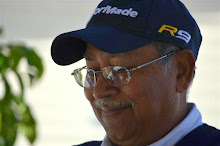
Sadly Mr.Dharangdharia is no more,left for his heavenly abode 3 years back!

6 comments:
Wonderful description in all. Yes
Gujrat is like that. You find good
People there and co-operate. What to comment on Dwarka teerth.
Wanakbori and Sikka memorable
Sites for site management.
. Enjoyed this blog respected sir
Time travel again... Enjoyed. Your reference to Mr Lalbhai must be the industrialist - of the famous Lalbhai Group, the Textile sector...
Great experience sharing. Kind regards
अनुभव कहता है कि ज़िन्दगी के कई रूप हैं
कभी मिलती छांव तो कभी मिलती धूप है
हर अनुभव सिखाता है कि चलते जाना है
इसी के आगे मन्ज़िल है जिसे फ़िर पाना है 👍🏼
Thanks dear Shukla for your comment !
Thanks dear Subhedar, yes a nostalgic recall !
Thanks dear Vijay for your poetic rejoinder !
Post a Comment