The Lansdowne Detour: A Morning, a Mystery, and a Very Confused Gentleman

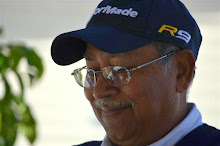
I stepped out of the lake area, still catching my breath from the morning walk, and headed towards my SUV. That’s when I noticed Gopal, my driver, looking more agitated than a cat at a dog show. Inside the vehicle sat a gentleman in his sixties—T-shirt, jeans, walking shoes—looking as though he owned the car, the road, and possibly the neighbourhood.
He didn’t know me. I didn’t know him. But the moment our eyes met, he gestured grandly, as if to say, “Come, sit. This is our car.” Now, in Kolkata, refusing such an invitation is like refusing phuchka from a street vendor—rude and potentially dangerous. So, I played along.
“Where shall I drop you?” he asked, turning to Gopal and calling him “Paltu.” Gopal shot me a look that said, “Boss, I swear I’ve never seen this man before.”
It didn’t take a detective to figure it out. The gentleman had Alzheimer’s. No short-term memory, just a mind stuck somewhere in the past, flipping through old photographs while the present blurred into watercolour.
“Where are you heading?” I asked casually.
He smiled. “Lansdowne. My house.”
“Perfect,” I said. “I’m going that way too.” Then, to Gopal: “Paltu, take us to our house.” I winked. Gopal, bless him, started the SUV without another word.
Jalebi, Jagannath, and the Time-Traveling Shopkeeper
On the way, past Gariahat, I watched the gentleman. He was looking out the window like a child discovering Kolkata for the first time—every shop, every tree, every stray dog a new wonder.
When we neared Lansdowne market, he suddenly pointed. “Stop! I want jalebi for breakfast.”
We pulled up outside an old sweet shop that looked like it had survived the British, the Raj, and at least three municipal elections. The shopkeeper, an elderly man named Jagannath, rose from his stool and approached with a smile that faltered when the gentleman didn’t recognise him.
“I’m Jagannath,” he said, gently.
The gentleman squinted. “But… how did you become so old in just a few days?”
Jagannath’s smile froze. He looked at me, helpless. I took him aside and explained: this man remembers the past vividly, but the present slips through his fingers like sand.
“Do you know where he lives?” I asked.
Jagannath nodded. “He was very rich. First wife died, left a two-year-old son. He remarried—a poor woman, Lata. She raised the boy well. The son went abroad for studies. After that… I don’t know. But I know the old house.”
The House That Wasn’t There Anymore
We drove on, Jagannath accompanying us. Soon, we reached a spot where an old house was being demolished—walls half-gone, debris everywhere, the skeleton of a home being erased.
The gentleman got down and rushed towards the demolition squad, shouting, “Who gave you permission to destroy my house?”
I approached the supervisor. “What’s going on here?”
He handed me a mobile number. “Call the real-estate agent.”
I did. The agent’s voice was smooth, practiced. “The property now belongs to Sonappu. Notorious builder near Ballygunge station. You may have heard of him.”
Oh, I had. Sonappu—alias Biswajit Poddar—was the kind of name that made South Kolkata residents clench their fists. Along with DCP Santanu Sinha Biswas, he’d built a racket targeting senior citizens, forcing them to sell land below market rate, forging documents, and using police muscle to evict those who resisted.
Lata’s Tears and a Son in America
Just then, an old lady came running from a nearby tea shop, crying. It was Lata, the second wife.
“They took our house,” she said, voice trembling. “Sonappu and DCP Sinha—they forged my husband’s signature when they found out about his disease. Our son came from the US to challenge them, but TMC goons threatened him. He accepted 20 lakhs, gave it to us to buy a flat. Now he sends monthly allowance.”
She looked at her husband, who was still staring at the rubble, confused. “He doesn’t remember any of this. But I do.”
I’ve read about these evictions in the newspapers—elderly couples, widows, retired teachers, all pushed out by the notorious duo during the TMC regime. Now, both Sonappu and DCP Sinha are behind bars, but for many, justice came too late.
Jagdish’s Morning Adventure
Later, over tea, Jagdish—my friend who’d witnessed the whole thing—recounted the morning’s adventure.
“You should’ve seen him,” he said, laughing. “One minute he’s ordering jalebi like it’s 1985, the next he’s confronting a demolition squad like he’s in a Satyajit Ray film.”
We started planning our next move. I noted down Lata’s address, promising to inform the Chief Minister’s office. The Suvendu Adhikari government has been cracking down on corruption, with multiple police and central agency actions against land-grabbing networks. Maybe, just maybe, this family could get their home back.
A Playful Postscript
As I left, I thought about the irony. In a city where memory is both a curse and a blessing, this gentleman had forgotten everything—except the one thing that mattered: home. And in a twist no writer could invent, the villains of our story were already in jail, their empire crumbling faster than the house they’d destroyed.
Sometimes, justice is slow. Sometimes, it’s served with jalebi.
Note: The story is based on real status during TMC misrule in Bengal!

No comments:
Post a Comment