
At that time, if you praised Gujaratis in certain drawing rooms of Kolkata, people would look at you as though you had openly declared love for karela juice.
But history has its own sense of humour.
Two Gujaratis — Narendra Modi and Amit Shah — ultimately became catalysts for many educated Bengalis to start speaking openly against political intimidation and organised hooliganism. Suddenly people again started discussing Syama Prasad Mukherjee, the man who played a major role in ensuring Kolkata remained in India when Jinnah and Huseyn Shaheed Suhrawardy had different plans during Partition days.
Of course for decades his name was carefully kept under layers of textbook dust because he was considered too Hindu for the comfort of the fashionable secular crowd.
Anyway, politics apart, my main purpose is to narrate my personal experience with Gujaratis and Gujarat.
From 1985 to 1988 I was posted at Wanakbori Thermal Power Plant in Gujarat. My son Anish was studying in boarding school at Baroda in Bharatiya Vidya Bhavan. I was staying with my family in a Gujarat Electricity Board township quarter beside the power station. Around 30 to 40 of us from BHEL were living there, scattered across different flats among GEB employees.
We were on the fourth floor of an apartment block where seven out of eight residents worked for GEB. The odd man out was yours truly.
One day there was a knock on the door. I opened it and found a delegation standing outside with papers in hand. They politely informed me they were from the GEB Cooperative Society and had come to collect our yearly requirement of wheat, rice, peanut oil and Valsad mangoes.
I immediately clarified, “But I am not a GEB employee.”
They laughed as though I had cracked a poor joke.
One gentleman replied, “But you are staying with us. So you are part of our family.”
Frankly, I was touched.
They handed me a form and told me to fill the annual household requirement. While filling it I jokingly asked, “Will you deliver ripe mangoes also?”
Again collective laughter.
“No no,” they said, “green mangoes. You keep them inside wheat bags. They will ripen beautifully.”
I learnt something important that day.
First — Gujaratis have a remarkable cooperative culture. Once you are inside their ecosystem, your company, caste, language or native place becomes secondary.
Second — they understand economics far better than many MBA graduates. Bulk purchase during the harvest season meant cheaper rates for everyone.
Suddenly I understood why every Gujarat house had a big storage room next to the kitchen. Bengalis store emotions and old magazines. Gujaratis store annual food supply.
After that it became routine.
Before Diwali, cooperative members would arrive asking our requirement for decorative lights, crackers, sparklers and other festival items. Everything came home-delivered long before modern app-based delivery companies were born. Gujarat had already invented Amazon without computers.
During those three years I hardly missed Durga Puja emotionally, although physically I often did not return to Bengal because my son’s school had limited holidays. Instead, for nine nights I immersed myself in Garba celebrations.
And what evenings those were!
The giant ground would transform into a colourful sea of swirling dresses, clapping rhythms and dandia sticks. One day some GEB employees practically dragged me into participation. Their hidden motive was clever. They knew that if I joined, then Chief Engineer Dharangdharia might also come because he had developed a special affection for me due to my professional sincerity.
Now Mr. Dharangdharia was feared by almost everyone in the power station. But in Garba grounds hierarchy melted faster than ice cream in May.
So there I was — one Bengali engineer from Allahabad origin — moving in circles with hundreds of Gujaratis till midnight. Outer male circle clockwise, inner ladies’ circle anticlockwise, then sudden dandia exchanges. After a few rounds even my engineering brain lost track of rotational dynamics.
One incident from those Navaratri days still remains deeply etched in my mind.
We were returning late at night from Baroda to Wanakbori by road. It must have been around 1 am. As our vehicle crossed villages, I noticed groups of young girls in colourful ghagra-cholis walking cheerfully from one village to another to participate in Garba.
No fear.
No nervousness.
No protective convoy around them.
They were laughing, chatting and moving freely under the night sky as though it was early evening.
Coming from North India and having worked extensively in the Eastern belt, the sight appeared almost unreal to me. In many places there, even grown men hesitate before travelling alone late at night, forget about young girls walking fearlessly after midnight during festivals.
I remember telling my wife, “Either Gujaratis are exceptionally community-minded people or criminals here are on Navaratri vacation.”
That scene left a lasting impression on me.
The whole society appeared to become one extended family during those nine nights. Villages vibrated with music and celebration, yet underneath there was discipline, social trust and a sense of collective responsibility.
I must honestly admit: during those days I never felt I was an outsider in Gujarat.
We were allowed to watch movies screened on giant outdoor screens for township residents. Festivals were collective. Celebrations were collective. Even happiness appeared cooperative in nature.
No wonder the Anand milk movement became successful there. Gujaratis instinctively know how to organise community participation.
Then came Uttarayan — the famous kite festival.
Before Gujarat, my experience with kites was mostly theoretical. In Wanakbori it became practical training under battlefield conditions.
My dear colleague A.K. Anand organised rooftop kite-flying sessions. Chief Engineer Dharangdharia, my BHEL colleague Pathak and many others would gather on terraces from morning onwards. The January sky looked like Parliament after election season — colourful objects flying in all directions while people shouted aggressively.
Beer bottles, chicken, hot rotis prepared by Meenabehen — Anand’s wife — and endless kite warfare.
Since the kite strings were coated with powdered glass, we wore gloves like surgeons preparing for operation. Every successful cutting of opponent’s kite was celebrated as though India had won a cricket match against Pakistan.
After leaving Wanakbori, I never again experienced such joyous madness.
Ironically, whenever skeptical Bengalis questioned Gujaratis, their entire knowledge came from newspaper headlines and political narratives. My own lived experience was exactly the opposite.
In fact, GEB once selected a badminton team for an inter-department tournament and Chief Engineer Dharangdharia included me as one of the selectors — despite my not being a GEB employee. My friend P.C. Patel had probably informed him about my weakness for badminton.
When my transfer order to Vizag arrived, several GEB colleagues urged me to stay back. Some even offered to use political influence to cancel the transfer.
But throughout my career I never used political connections for personal benefit. So with a heavy heart we left Wanakbori.
Even after retirement I remained in touch with Dharangdharia through Anand. Sadly he is no more.
Yet even today, when people casually stereotype Gujaratis sitting in Kolkata drawing rooms with intellectual seriousness and fish fry in hand, my mind quietly travels back to Wanakbori.
To cooperative societies.
To mangoes ripening inside wheat bags.
To midnight Garba circles.
To fearless girls walking under village skies at 1 am.
To rooftop kite battles.
To a Bengali engineer who was treated not as an outsider but as one among them.
And then I smile to myself.
Sometimes real experience is a far better teacher than politically manufactured wisdom.

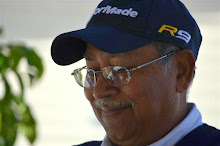
11 comments:
Respected Sir, Really a wonderful piece of writing. I also had a chance to experience life in Gujarat at a young age. As I did my engineering from Surat, Gujarat, from 1982 to 1986. As you described each and every thing so beautifully and truly exactly as it happened in Gujarat. The Garba season is a totally unreal experience to us from lawless land of UP. Girls and ladies wearing heavy jewellery and moving freely fearlessly at night 1:00AM or 2:00 AM was an unbelievable sight for us. It still is. Nothing can beat the Garba season of Gujarat, the longest dance festival on the Earth. Thanks a lot sir for writing such a beautiful piece on life in Gujarat.
Very touching
Those were the days my friend/ We thought they'd never end!!
The entire narrative was politically built by congress (Fake person) and dutifully amplified, both nationally and internationally) by slave media to hit BJP and finish the party for ever.
Destiny did not oblige.
May be, in future, someone will sure bring out an in depth account for future generations.
It's wonderful contribution. *Gujaratis* are a peace loving affectionate community, who have contributed immensely on most of fronts incl. economy of our country.
*Land of Lord Krishna's philosophy*. Honest to the core be it *Sanatanis, Parsis or Bohras*.
Your contribution has corrected misconception created by political vested interests. Kind regards
- *सकल लोकमां सहुने वंदे निंदा न करे केनी रे*
- *वाच काछ मन निश्चळ राखे धन धन जननी तेनी रे*
Thanks dear Rajeev for your observation !
Thanks Shailendra !
Thanks dear Subhedar, true vitiated the mind of people !
Thanks dear Vijay, very true,they are peaceful and full of feeling for larger interest of the community !
Thanks dear Puri for dropping in !
Post a Comment