Showing posts with label darjeeling. Show all posts

Friday, August 07, 2026

Turbine in the snow

***
# Turbines in the Snow: 
My First Hydro Project and the Harrowing Nights of Rammam Every engineer remembers their first hydro project. It is the crucible where theoretical knowledge meets the raw, unforgiving reality of nature. For me, that crucible was the Rammam 4 x 12 MW hydro project. I became involved with Rammam in November 1994, stepping into a project that was already steeped in history. 
While the Rammam site itself held a proud legacy—the very first unit of the historic plant having been commissioned way back in 1995–96—the equipment for this specific 4 x 12 MW expansion was relatively new. The heavy electrical machinery had been supplied from Bhopal just two to three years prior.
 My task in the mid-90s was to oversee the complete erection and commissioning of this equipment, transforming it from stored components into a fully functional powerhouse. Because the site was located in a deep, remote gorge, I established my basecamp in Darjeeling, about 70 kilometers away. 
While Darjeeling offered the charm of misty tea gardens and the majestic silhouette of the Himalayas, my mind was almost always focused on the roaring waters and the erection work at Rammam. 
I would make the arduous 70-kilometer journey to the site nearly every two months to oversee the progress. Usually, I made these trips alone, but in December 1995, I decided to break the routine. I took my wife, Madhuri, along with me. I wanted her to see the magnificent scale of the project and experience the unique beauty of the Himalayan winter. It was a decision that would result in one of the most memorable—and terrifying—journeys of my life.
The drive up to the site was breathtaking. As we ascended toward Dhotrey, crossing an altitude of more than 8,000 feet, the landscape transformed. The crisp winter air gave way to a heavy, steady snowfall. By the time we reached the powerhouse, the world outside was a pristine, silent blanket of white. Inside the powerhouse, however, it was a hive of activity. We spent a few hours walking the floor, the hum of the machinery and the clatter of erection work vibrating through the soles of our shoes. I sat down with my team of engineers, poring over blueprints and discussing the intricate details of the commissioning program. There is a unique camaraderie forged in remote powerhouses, surrounded by the sheer scale of the machinery and the mountains. 
 By late afternoon, the technical discussions wrapped up, and we headed to the site guest house. Kujur, our indefatigable and deeply hospitable site in-charge, had organized a wonderful, warming dinner for us. We shared stories, laughed, and enjoyed the meal, completely insulated from the harsh elements outside. But as the clock struck 8:00 PM and we finished our dinner, the reality of our situation set in. It was time to drive back to Darjeeling. Stepping out of the guest house, the romanticism of the snow vanished. It was pitch dark. The temperature had plummeted, and the road ahead was a treacherous ribbon of snow-covered tarmac clinging to the edge of the mountain. I have traveled many difficult roads in my career, but I have never made such an arduous journey as the drive back from Rammam that night. As our jeep began the descent, the conditions deteriorated rapidly. The snow had compacted into ice, and the steep, winding hilly road offered zero margin for error. Every few minutes, the jeep would lose its grip and skid violently toward the edge. I could feel the rear of the vehicle swing out, the tires scrabbling uselessly against the ice before catching just enough traction to pull us back from the abyss. The visibility was more or less zero. The headlights merely illuminated a swirling vortex of snowflakes, offering no clue about the sharp hairpin bends or the sheer drops just inches from our tires. Inside the cabin, the silence was deafening. Madhuri sat stoically, her hands gripping the seat.  Internally, my heart was hammering against my ribs. In those moments, time seems to slow down. Every skid felt like an eternity. I realized with absolute clarity that anything could have happened. A slight miscalculation, a patch of black ice hidden beneath the snow, or a momentary lapse in concentration, and the jeep would have tumbled into the unfathomable darkness of the gorge below. We were entirely at the mercy of the mountain and the skill of the driver. 
 When we finally saw the distant, faint lights of Kurseong, a profound wave of relief washed over me. Our driver pulled the jeep to a stop, turned off the engine, and I let out a breath I felt I had been holding for hours. Darjeeling was another one hour drive in the incessant rain. Looking back, the Rammam 4 x 12 MW project remains a cornerstone of my career. It taught me the intricacies of hydro-mechanical erection and commissioning, and the importance of bringing newly supplied equipment to life in challenging terrains. But more than the technical lessons, it taught me about resilience. It taught me about the dedication of men like Kujur, who keep the operations running in the most remote corners of the country. And it taught me to maintain a deep, abiding respect for the Himalayas—a place of breathtaking beauty, but one that demands your absolute vigilance. To this day, often I am transported back to that pitch-dark night in December 1995,  the skidding jeep through the blinding snow,the expert driver just trying to get me and wife  safely home.

Friday, December 19, 2025

"A Spooky Night at The Chalet: Where Ghosts Sip Tea and Secrets Linger in the Mist! đŸĩđŸ‘ģ"


---

The December sun bathed Darjeeling’s mall in a golden glow, its warmth a fleeting shield against the Himalayan chill that crept into your bones. A few years back, I was wandering through the bustling heart of the town, sidestepping tea hawkers and selfie-snapping tourists, when I met Thapa, a retired professor from St. Joseph’s College. With his tweed jacket, salt-and-pepper beard, and eyes that sparkled with mischief, he looked like he’d just stepped out of a lecture on Himalayan mysticism. We settled on a bench, soaking in the view of Kanchenjunga’s snow-draped peaks, and got to chatting.

I mentioned Darjeeling’s reputation for ghost stories—tales of spectral British sahibs haunting colonial bungalows, restless monks wandering ancient monasteries, and the infamous “Gray Lady” of the old Victoria Hospital, said to drift through its abandoned corridors, searching for her lost child. Thapa chuckled, adjusting his glasses. “Hope you don’t think *I’m* one of those ghosts, lurking here to haunt unsuspecting tourists.”

I grinned and gave his arm a playful nudge. “Nope, you’re too solid for a specter. Ghosts don’t carry library cards, do they? Or do they haunt the overdue fines section?”

He laughed, a deep, rumbling sound that echoed like a monastery gong. “In Darjeeling, the line between the living and the dead is thinner than a first flush tea leaf. If you’re chasing ghosts, meet me at The Chalet at 8 pm. It’s a tucked-away cafe on the winding road to the Himalayan Mountaineering Institute.”

I raised an eyebrow. “The Chalet? What’s the deal—haunted by spirits, or just hipsters in Halloween costumes year-round?”

Thapa’s smile turned cryptic, like he was sharing a secret with the mountains. “Oh, it’s a place where the past lingers like mist. Ever heard of the Lepcha legend of the ‘Shadow Walkers’? They say spirits of ancient traders roam these hills, guarding hidden treasures from the Silk Route days. Some claim The Chalet’s built on one of their old paths. Show up, and you’ll see. Bring a scarf—it gets chilly when the shadows dance.”

Intrigued and mildly spooked, I arrived at The Chalet that evening. The cafe was nestled on a lonely hillside, shrouded by towering pine trees that stood like silent sentinels, their needles whispering secrets to the night. The air carried the scent of woodsmoke and mystery, and the distant howl of a Himalayan wolf—or was it the wind?—sent a shiver down my spine. The exterior was deceptively charming, with ivy-clad walls and glowing lanterns, but stepping inside was like crossing into a gothic novel. Dim candlelight flickered, casting eerie shadows on the walls, and the low, haunting strains of organ music—straight out of a Dracula soundtrack—filled the air. The patrons didn’t help: cloaked in dark coats, wide-brimmed hats, and masks that hid all but their glinting eyes, they looked like they’d wandered in from a masquerade for the undead. Were they locals sipping Darjeeling’s finest, or apparitions nursing spectral brews? The jury was out.

Thapa waved me over to a semi-dark corner table, where the light barely reached. “You made it,” he said, handing me a leather-bound menu that creaked like an old crypt door. “No chickening out now. The ghosts here don’t take kindly to cancellations.”

I slid into the seat, scanning the room. “This place is creepier than a fog-covered tea estate. Those folks over there—coats, hats, masks—look like they’re auditioning for a ghost convention. What’s the deal, Thapa? Are we in a cafe or a portal to the underworld?”

He leaned back, smirking. “In Darjeeling, my friend, every cafe is a potential portal. You know the local lore about the ‘Mist Wraiths’? They say when the fog rolls in thick, spirits of lost trekkers wander the hills, drawn to warm places like this. Those masks? Could be fashion, could be precaution. Ghosts hate being recognized—it ruins their mystique.”

Before I could retort, a lanky waiter glided over, his black uniform blending into the shadows. “Good evening, sirs. I’m Luther,” he said, his voice smooth as moonlight on a frozen lake. “Our special tonight is the ‘Wraith’s Whisper,’ a dessert so light it might float off your plate. What’ll it be?”

I smirked. “Wraith’s Whisper? Sounds like it’ll haunt my stomach. What if it possesses my fork?”

Luther’s eyes twinkled, but his face stayed deadpan. “Sir, our forks are blessed by a lama from Ghoom Monastery. No possession guaranteed, but if it tries, we’ll banish it to the kids’ menu.” Thapa roared with laughter, and I ordered a masala chai to calm my nerves, while he opted for a black coffee—“to match the vibe,” he quipped.

As we sipped, the manager, Sebastian, strolled over—a burly man with a mustache that could hide a yeti and a voice like gravel crunching under boots. “All good here, gentlemen? No spectral disturbances?”

Thapa grinned. “Sebastian, my friend here thinks your customers are straight out of a Lepcha ghost tale. Tell him—are those masks for style, or are we dining with the Shadow Walkers?”

Sebastian’s mustache twitched with amusement. “In The Chalet, we welcome everyone—living, dead, or just here for the Wi-Fi. But if you’re worried, try our ‘Yeti Toddy.’ It’ll warm your soul, even if it’s halfway to the afterlife.”

I played along. “Yeti Toddy? Does it come with a side of abominable snowman? I’m already wondering if I’m dining with humans or the cast of a haunted tea party.”

The banter flowed like the chai, but the atmosphere thickened when the music surged and a sudden gust from an open window rattled the lanterns. One of the masked figures at the bar turned slowly, its eyes locking onto mine with an intensity that froze my blood. My pulse quickened—was this a real ghost? A Shadow Walker, perhaps, guarding some ancient treasure buried beneath the cafe? I whispered to Thapa, “Professor, that one’s staring like I owe it money. Friendly spirit, or should I start chanting the names of tea estates to ward it off?”

Thapa whispered back, “Chanting tea names? Brilliant. Try ‘Margaret’s Hope, Temi, Castleton.’ Ghosts can’t resist a good Darjeeling blend—they’ll float off in embarrassment.”

Luther reappeared with our drinks, but as he set them down, his hand seemed to shimmer *through* the steam rising from my chai—or was it the dim light playing tricks? I blinked, and he smirked. “Just the fog, sir. It loves to mess with first-timers. Or maybe I’m just that ghostly fast.”

Sebastian joined in, chuckling. “Don’t mind Luther. Last month, a tourist swore he saw a spectral yak herder at the bar. Turned out it was just Mrs. Tamang in her new shawl, sipping momos and rum.”

The tension broke when the “ghost” at the bar unmasked, revealing a young local artist in costume for an Instagram photoshoot, her eyes glinting with laughter, not malice. No Shadow Walker, just Darjeeling’s quirky charm at work. But the near-miss had us all cackling. Thapa raised his cup. “To almost-ghosts and foggy frights! Better than meeting a real Mist Wraith—they’re terrible tippers.”

I clinked my chai against his coffee. “And to Thapa, the professor who drags innocents into haunted cafes. Next time, warn me if the menu includes ‘spectral samosas’ or a side of Lepcha curses.”

Luther chimed in, balancing a tray with eerie grace. “No curses here, sir, unless you count our spicy chutney. That’ll haunt you till dawn.”

Sebastian clapped me on the shoulder. “Come back tomorrow. We’re hosting a ‘Ghosts of Darjeeling’ storytelling night. You might hear about the Phantom Rickshaw of Chowrasta or the Singing Monk of Observatory Hill. Bring your friend—he’s got a knack for spotting spirits.”

As we stepped out into the starry night, the pine trees rustling like they were applauding our survival, I felt the thrill of a memorable adventure. The Chalet hadn’t been truly haunted, but between the foggy folklore, the masked patrons, and Thapa’s wicked wit, it was the closest I’d come to dining with Darjeeling’s legendary spirits. The town’s tales—of Shadow Walkers, Mist Wraiths, and ghostly sahibs—lingered in my mind, as did the warmth of that chai and the laughter that echoed louder than any ghostly moan. I turned to Thapa. “Next time, professor, I’m picking the cafe. Somewhere with less... otherworldly ambiance.”

He winked. “Good luck. In Darjeeling, even the tea leaves have ghosts.”


Sunday, August 11, 2024

āĻŽāϞ āϰোāĻĄেāϰ āϏেāχ āϰাāϤ্āϤিāϰ


 "āϝāĻ–āύ āφāĻŽি āĻĻাāϰ্āϜিāϞিংāϝ়ে āφāĻŽাāϰ āĻšোāϟেāϞে āĻĢিāϰে āĻāϞাāĻŽ, āϤāĻ–āύ āĻ•ুāϝ়াāĻļাāϚ্āĻ›āύ্āύ āϰাāϤেāϰ āĻŦাāϤাāϏ āφāĻŽাāĻ•ে āϏ্āϝাঁāϤāϏেঁāϤে āĻ•āĻĢিāύেāϰ āĻŽāϤো āφঁāĻ•āĻĄ়ে āϧāϰেāĻ›িāϞ। āϏ্āϟ্āϰিāϟāϞাāχāϟāĻ—ুāϞি, āύিāϚে āϚāϞে āφāϏা āĻŽেāϘেāϰ āĻĻ্āĻŦাāϰা āĻŦিāϚ্āĻ›ুāϰিāϤ, āύিāϰ্āϜāύ āϰাāϏ্āϤাāϝ় āĻāĻ•āϟি āĻ­āϝ়āĻ™্āĻ•āϰ āφāĻ­া āĻĢেāϞেāĻ›িāϞ। āφāĻŽি āĻŦুāĻāϤে āĻĒাāϰāĻ›িāϞাāĻŽ āĻ…āύুāĻ­āĻŦ āϝে āĻ•েāω āϝেāύ āφāĻŽাāĻ•ে āĻĢāϞো āĻ•āϰāĻ›ে, āφāĻŽাāϰ āĻšাāĻĄ় āĻšিāĻŽ āĻšāϝ়ে āφāϏāĻ›ে āφāĻŽি āĻāχ āĻšিāϞ āϏ্āϟেāĻļāύে āĻ­ৌāϤিāĻ• āĻāύāĻ•াāωāύ্āϟাāϰেāϰ āĻ…āύেāĻ• āĻ—āϞ্āĻĒ āĻļুāύেāĻ›ি āĻāĻŦং āφāĻŽি āĻ­াāĻŦāĻ›িāϞাāĻŽ āϝে āφāĻŽি āĻāχ āĻ…āϞৌāĻ•িāĻ• āχāϤিāĻšাāϏেāϰ āϏāϰ্āĻŦāĻļেāώ āĻ…āϧ্āϝাāϝ় āĻšāϤে āϝাāϚ্āĻ›ি āύা āϤো l


 “āĻšু āχāϏ āĻĻেāϝ়াāϰ?”  āφāĻŽি āĻĄাāĻ•āϞাāĻŽ, āφāĻŽাāϰ āφāĻ“āϝ়াāϜ āϐ āϘāύো āϜāĻ™্āĻ—āϞেāϰ āĻŦāĻĄ় āĻŦāĻĄ় āĻ—াāĻ›ে Echo āĻšāϝ়ে āφāĻŽাāϰ āĻ•াāĻ›ে āĻĢিāϰে āĻāϞো āϝেāύ āĻ­েāĻ—āϚাঁāϚে.  āĻĒ্āϰāϤিāĻ•্āϰিāϝ়াāϟি āĻ›িāϞ āĻāĻ•āϟি āωāĻĒāĻšাāϏāĻŽূāϞāĻ• āύীāϰāĻŦāϤা, āφāĻŽি āĻ­াāĻŦāϤে āϞাāĻ—āϞাāĻŽ āϝে āφāĻŽি āĻāĻ•āϜāύ āĻŦ্āϰিāϟিāĻļ āĻ•āϰ্āύেāϞেāϰ āĻ…āϏ্āĻĨিāϰ āφāϤ্āĻŽা āύাāĻ•ি āĻ•োāύ āĻĻুāώ্āϟু āĻ—োāϰ্āĻ–াāϰ āĻĒ্āϰেāϤাāϤ্āĻŽা āφāĻŽাāĻ•ে āĻĒāϰীāĻ•্āώা āĻ•āϰāĻ›ে ।


 āφāĻŽাāϰ āĻŽাāĻĨাāϝ় āϤāĻ–āύ āĻ…āύেāĻ• āϰāĻ•āĻŽেāϰ āϚিāύ্āϤা āϘুāϰ āĻĒাāĻ• āĻ–াāϚ্āĻ›ে , āϤāĻ–āύ āĻāĻ•āϟি āĻĻৃāĻĸ় āĻĒāĻĻāϧ্āĻŦāύি āφāĻŽাāϝ় āĻŦাāϏ্āϤāĻŦে āĻĢিāϰিāϝ়ে āφāύে ।  āĻ•ুāϝ়াāĻļা āĻĨেāĻ•ে āϏেāύাāĻŦাāĻšিāύীāϰ āĻĒোāĻļাāĻ• āĻĒāϰা āĻāĻ• āĻĻুāϰāύ্āϤ āĻ­āĻĻ্āϰāϞোāĻ• āĻŦেāϰিāϝ়ে āĻāϞেāύ, āĻĒ্āϰāϤিāϟা āĻŦিāύ্āĻĻু āĻ…āĻŦāϏāϰāĻĒ্āϰাāĻĒ্āϤ āĻ…্āϝাংāϞো-āχāύ্āĻĄিāϝ়াāύ āĻ•āϰ্āύেāϞেāϰ āĻĄ্āϰেāϏ ।  āĻ•িāĻĨ, āϏে āύিāϜেāϰ āĻĒāϰিāϚāϝ় āĻĻিāϞ, āϤাāϰ āĻŽুāĻ–ে āĻāĻ•āϟা āĻŦেāĻĒāϰোāϝ়া āĻšাঁāϏিl


 "āĻŽāύে āĻšāϚ্āĻ›ে āĻ•েāω āϤোāĻŽাāĻ•ে āĻ…āύুāϏāϰāĻŖ āĻ•āϰāĻ›ে, āϤাāχ āύা?"  āϤিāύি āϜিāϜ্āĻžাāϏা āĻ•āϰāϞেāύ, āϤাāϰ āĻ•āĻŖ্āĻ āϏ্āĻŦāϰ āύিāϚু āĻāĻŦং āώāĻĄ়āϝāύ্āϤ্āϰāĻŽূāϞāĻ•।  āφāĻŽি āĻŽাāĻĨা āύাāĻĄ়āϞাāĻŽ, āĻāĻŦং āϏে āϜেāύেāĻļুāύে āĻšাāϏāϞ।  "āφāĻŽাāϰ āϏাāĻĨেāĻ“ āĻšāϝ়, āĻŦুāĻĄ়ো āĻŽাāύুāώ। āϤāĻŦে āĻļুāϧুāĻŽাāϤ্āϰ āĻļীāϤāĻ•াāϞে। āφāĻŽাāϰ āĻŽāύে āĻšāϝ় āĻāϟা āĻ•ুāϝ়াāĻļা āĻāĻŦং āĻĒাāχāύ āĻ—াāĻ› āφāĻŽাāĻĻেāϰ āϏাāĻĨে āĻ›āϞāϚাāϤুāϰি āĻ•āϰāĻ›ে।"


 āφāĻŽি āϏ্āĻŦāϏ্āϤিāϰ āύিঃāĻļ্āĻŦাāϏ āĻĢেāϞāϞাāĻŽ, āĻ­াāĻŦāϞাāĻŽ āĻšāϝ়āϤো āĻāϟা āĻ—্āϰীāώ্āĻŽāĻ•াāϞে āφāĻŽাāϰ āφāϰ্āĻĨ্āϰাāχāϟিāϏেāϰ āĻ‹āϤুāϰ āϏāĻŽāϤুāϞ্āϝ।  āĻ•িāĻĨেāϰ āφāĻļ্āĻŦāϏ্āϤ āĻšাāϏি āχāĻ™্āĻ—িāϤ āĻĻেāϝ় āϝে āĻ•িāĻ›ু āϰāĻšāϏ্āϝ āĻ…āĻŽীāĻŽাংāϏিāϤ āϰেāĻ–ে āĻĻেāĻ“āϝ়া āĻ­াāϞ, āĻĻাāϰ্āϜিāϞিং āĻāϰ āĻŽāϞ āϰোāĻĄেāϰ āϐāϤিāĻš্āϝāĻ—āϤ āφāĻ•āϰ্āώāĻŖ āϰāĻ•্āώা āĻ•āϰে।


 āĻāĻ• āĻĒāϞāĻ•ে , āϏে āĻ•ুāϝ়াāĻļাāϰ āĻŽāϧ্āϝে āĻ…āĻĻৃāĻļ্āϝ āĻšāϝ়ে āĻ—েāϞ, āφāĻŽি āĻ•ি āĻĒুāϰো āϘāϟāύা āϟা āĻ•āϞ্āĻĒāύা āĻ•āϰেāĻ›ি, āĻ“ āĻ•ি āϏāϤ্āϝি !  āĻ•িāύ্āϤু āφāĻŽি āϝāĻ–āύ āφāĻŽাāϰ āĻšাঁāϟা āϚাāϞিāϝ়ে āϝাāϚ্āĻ›িāϞাāĻŽ, āϤāĻ–āύ āφāĻŽি āĻāχ āĻ…āύুāĻ­ূāϤিāϟা āĻেāĻĄ়ে āĻĢেāϞāϤে āĻĒাāϰিāύি āϝে āĻ•িāĻĨ āĻāĻ–āύāĻ“ āϏেāĻ–াāύেāχ āφāĻ›ে, āφāĻŽাāϰ āωāĻĒāϰ āύāϜāϰ āϰাāĻ–āĻ›ে - āĻāĻŦং āĻ­ূāϤ।"

āφāĻŽি āĻāĻ–āύ āĻ•āϞāĻ•াāϤাāϝ় āĻŦāϏে āϝāĻ–āύ āϏেāχ āϰাāϤ্āϤিāϰে āĻ•āĻĨা  āĻ­াāĻŦি āϤāĻ–āύ āĻ­াāĻŦি āϝেāύ āφāĻŽাāϰ āϜāύ্āϝ āϐ āϏāĻŽāϝ়েāϰ āϐ āϘāϟāύা āĻ•োāύ āύাāϟ্āϝāĻ•াāϰ āĻļুāϧু āφāĻŽাāϰ āϜāύ্āϝ āϏাāϜিāϝ়ে āĻ›িāϞ, āĻ•āĻ­িāĻĄেāϰ āĻĒāϰ āφāϰ āĻĻাāϰ্āϜিāϞিং āϝাāĻ“āϝ়া āĻšāϝ় āύি,āĻ•োāύো āφāϏা āϝাāϝ় āύা āĻ•াāϰāĻŖ āϏেāχ āĻĻিāύেāϰ āϏেāχ āĻŽুāĻšূāϰ্āϤ āϤো āĻĒাāĻŦো āύা !

Monday, May 13, 2019

A fist full of memories

A fist full of memories
……………………………

My caddy Hulo is irregular during winter days. That is the time when NRIs and foreign visitors come and stay in the Toly club guest house. Hulo has a contact in golf range who helps him to become caddy of the foreign guests. During those months he avoids me but once the guests go away then again he would pester me to take him back. That sly guy has a unique way of approaching me; he would bring some golf accessories gifted to him by those foreigners and ask me to accept those. Many a times Hulo has introduced me to these golfing foreigners and I have played with them gladly.
Mr. Evans was one such introduced by Hulo , was from England, loved playing golf. He loved coming back to India as frequent as possible; it seems he spent his childhood in tea gardens of Darjeeling. Whenever he is in India would visit Darjeeling.
I had played a number of times  with him. This happened a few years back.
While playing we would share our experiences. During our one such outing I narrated my experience of momentarily mentally getting transported to some other place. I narrated my experience as follows;
I was sitting in my second floor office in Chatterjee International; from the wide window of my office the Calcutta maidan was clearly visible. I watched some eagles were  circling over the maidan and momentarily I felt as though I was sitting on a hill in front of a monastery in Bhutan where eagles were gliding effortlessly. I had visited Bhutan a year back then and had watched eagles circling while visiting a monastery, the monastery was perched on the top , eagles were gliding over the valley at my eye level. The circling eagles triggered my mind to travel to Bhutan for a few seconds at that time when actually i was in my office in Chatterjee International.
Mr Evans heard me with interest, smiled mysteriously and told me an amazing story.
“Roy, by this time you know I visit India frequently.The reason of my coming is to visit my childhood places and live through those wonderful moments in Darjeeling tea gardens.”
“Live through? It is possible to travel back momentarily as I did, but how can you live through your childhood?” I said doubtfully.
“ I will share some confidential information , hope it will remain with you.”
I was eager to know so we hurriedly finished our golf round and headed for shamiana.
We ordered beer and he started his strange story.
He finished his school in North Point, Darjeeling and joined his father in running the garden. His father was a philanthropist; he used to run a charitable dispensary in the garden. Once a Tibetan monk fell seriously sick and was brought to that dispensary, Evans’ father made arrangement for the monk to stay in the company guest house. Evans was attracted by the wisdom of that noble monk; he would spend lot of time with him. It was the year of Naxal movement when his father decided to go back to England by selling off his garden. Evans was sad that he had to leave India. The monk would try to console young Evans by saying that nothing is permanent in this world.
“Noble one tell me how can I leave this beautiful place? If I feel nostalgic then I cannot come immediately.” Evans tearfully said.
“Tomorrow you come I would give you something.” The monk said.
Evans duly went next day, the monk gave him a jewel box.
“This will store your best moments spent here but you have to load it every year otherwise the size of this crystal will reduce by 1/50th for the missed year, then it will hold less memory.”
“You mean I can live through those moments?”
“Yes you can.” He opened the box and brought out a green crystal ball.
Evans held the crystal in his hand and was  mesmerized by it's beauty.
“Wise one please tell me how does it work?”
The monk gave a beatific smile and said, “ You should always keep the crystal in this box to avoid dissipation of the memories. Supposing you want to store memories of your school then go there and meditate in an isolated place after consuming one of these globules.”
The monk gave him a bottle of globules, they looked like opium balls.
“After taking a globule close your eyes, hold the crystal on your forehead and think of those moments in school with your friends which you want to cherish forever or may be some teaching by your favorite teacher. All those images running through your mind will get captured in this crystal.”
“Ok I understood, I go through the same process with all the associated places like Glennaries,Kaventers, Chowrastha, the tea gardens etc the places I love so much.”
“Yes that way you will capture the places with sight, sound and smell.”
“Wow, with all senses! Then how do I replay those?”
“In England whenever you have a feeling of melancholy then go to a room alone and sit comfortably facing east. Take out the crystal ball, take a globule close your eyes and hold ball on your forehead. Think of the times you want to visit and those will play up in your mental screen. For example you had some memorable experience in standard four then for that moment you will become mentally that little boy of standard four and live through that experience kind of replay of those moments.”
Evans was excited and without wasting any more time started writing down his memories of good moments before embarking on storing those in the crystal ball.
In the meanwhile the monk after getting cured had left the tea garden.
Evans could not come to India for next thirty years as he had to finish higher studies and start his professional career as a financier. But whenever he had yearning for the tea garden in Darjeeling then he would take the crystal ball to his study, close the door, pop the globule, face east, close the eyes and hold the crystal on his forehead. He would mentally get transported to that time which he chose and live through those nostalgic moments. He could smell the fresh tea leafs , he could see the descending cloud in the valley. He would be running as a kid in the play ground of the school. He felt as though those days were still with him.
But as he did not visit India for thirty years so the size of the crystal ball decreased considerably, many of the memories got faded out. After year 2000 he tried visiting every second year to recharge but because Darjeeling city has changed for the worst due to population growth, also he himself has aged so the recharging of memory effectively was a bit sketchy. The places around tea garden have not changed much so he could recharge those vividly.
I requested him to show me the crystal and he agreed without any persuasion.
We headed for his room in the guest house . He took out the wooden box containing the green crystal, then with lot of reverence he took out the crystal ball.I took the ball in my hand, felt a queer sensation running through my body. I held it against the light, the  refraction of the light caused it to glow ethereally.
Evans said, “I don’t think I can continue to come to India any more. This time I did not go to Darjeeling. I have one fourth bottle of globule left, if you want I can give you these two, you can try storing your memories.”
First I was reluctant but then I accepted his offer.
Now I have the bottle of globules and the box containing green crystal ball but then the places where I spent my childhood days with my parents  are all gone. We were staying in government colonies of Delhi like in Press Road in Minto Road area,Chummeries of  Gole Market, Wilson Square in front of Birla Mandir….those are all demolished giving way to new high rise government quarters , the modernization steam rolled our childhood dwellings to dust....of course i have not visited those places after hearing that those have been razed to ground.....even the house in Allahabad where i was born has been obliterated beyond recognition but in the hard disc of my memory those still exist in the original form which unfortunately i can not store in this green crystal...... .may be i will store new ones now.......


Saturday, December 30, 2006

Darjeeling during X mas,06


I always wondered about the attraction of Darjeeling.It is like a good book which I always try to leaf through in my spare time or an old Hindi song which I have not heard for a long time and then either hunt that out from collection of my CDs or go out and purchase one.This trip of Darjeeling was something like that,I longed to visit this heavenly place just after my trip to Mussourie,may be that trip to the northern hill station trigerred me to make this visit.Siliguri is the gateway for the hill stations like Gangtok,Thimpu,Kurseong,Kalimpong,Mirik and Darjeeling .One can reach Siliguri by road ,rail or by air.There are taxis available from railway stations,bus stops and airports.Darjeeling is about 76 km from the Bagdogra airport.It takes 3 hours with a break of half an hour.We stopped at Kurseong and had food in Amarjeet's Dhaba.The stuffed parathas are great .My this trip of Darjeeling taught me that before making any long journey it is wise to find out about the availability of toilet.We had harrowing experience in Darjeeling in locating proper toilet to relieve ourselves.We stayed in Sinclair's hotel. It is perched on the top and is meant for sportive crowd,a good amount of trekking is to be done to reach there.The staff there are friendly,accomodative and obliging.
We could see the snow capped Kanchanjungha from our hotel room.It was magnificent.The mall is the real place to chill.You are likely to come across your known friends.We came across Mr.Lahiri and his wife,that was a great surprise.The trip was spiced by the presence of Paramita and her son Ricky.
We were generally hanging around either at mall or in Glenary's.Glenary's boast of a good pub known as The Buzz.The top floor is having restaurant overlooking the valley,the next floor is bakery shop with tea ,coffee etc.There is a cyber cafe in the same floor.Lot of foreigners were either surfing the net or chatting or uploading the pictures taken by them.I too chatted from there. One should not forget to sample cakes,hotdog and chicken sizzler in Glenary's.The advantage of visiting Darjeeling in winter is that one can get a clear view of Kanchanjungha.The temperature was varying between 4 and 8 degrees.We took adequate woolens.
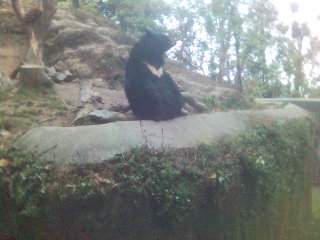
There is a zoo where three rare specis can be seen and these are Yak,Red Panda,Snow Leopard.
We spent most of the time at the mall and watching Nepali youth trying out football with the assorted football made out of rubber bands,they are really good in controlling that rubberry mass.The hill folks are real simple.I remeber when I made my first visit way back in seventies then all the young fellows used to watch English Western movie,strum their guitars and sing Cliff or Elvis but now it is all Hindi song singing crowd.We peeped in Kaventers ,there only I bumped on Mr.Lahiri.
I got many insight about the youth of Darjeeling from the taxi driver Tshering Sherpa who drove us back to Siliguri.
Though I am back in Cal, but the wet musky smell of Pine,Juniper keeps lingering along with the image of the cloud hovering around and the magnificent snow capped Kanchanjungha permanently etched in my mind.The taste of chicken sizzler in Glenary's is still fresh in my mouth,after so many years I tasted Hot Dog again which was our favourite snack at Standards by the side of Regal cinema in New Delhi.Those were the days of juke box,hot coffee and Hot Dog and roam about in Connaught Place.Well that is another place which keeps on pulling me like a magnet.So my visit to Delhi is never complete without visiting Connaught Place.Happy new year to all.