The Mahabharata is a treasure trove of human emotions, dilemmas, and lessons. Among its myriad turning points, the dice game and the events surrounding Jayadratha's slaying stand out as moments that not only shaped the course of the epic but also revealed the vulnerabilities of even the noblest characters.
The Dice Game: A Noble Man’s Fall
Yudhishthira, the eldest of the Pandavas, was the epitome of dharma, yet he harbored a fatal flaw—his penchant for dice. Fueled by ego and the lure of proving himself in a game of chance, he fell into the trap cunningly laid by Duryodhana and his uncle Shakuni. The dice, loaded and manipulated by Shakuni, ensured Yudhishthira’s defeat at every turn.
As Yudhishthira gambled away not just his kingdom and wealth but also his brothers, himself, and ultimately Draupadi, the consequences of unchecked greed and ego became horrifyingly apparent. The humiliation of Draupadi in the Kaurava court, where vile figures like Dushasana attempted to disrobe her, remains one of the darkest moments in the epic. Draupadi’s honor was saved by divine intervention, but the damage to the Pandavas' dignity was irrevocable. This episode marked the "Good, Bad, Ugly" dynamic vividly: the noble Yudhishthira (Good), the cunning Shakuni and Duryodhana (Bad), and the grotesque Dushasana and his ilk (Ugly).
Jayadratha's Infamy
Jayadratha, the husband of Dushala, the only sister of the Kauravas, epitomized cowardice and malice. Lusting after Draupadi during the Pandavas’ exile, he seized an opportunity to abduct her while the brothers were away. However, his plan was foiled when Arjuna and Bhima tracked him down using Arjuna’s sound-detecting arrows. They humiliated him, shaving his head—a grave insult—but spared his life on Yudhishthira’s insistence. This act of mercy would later haunt the Pandavas, as Jayadratha nursed his grudge.
The Death of Abhimanyu
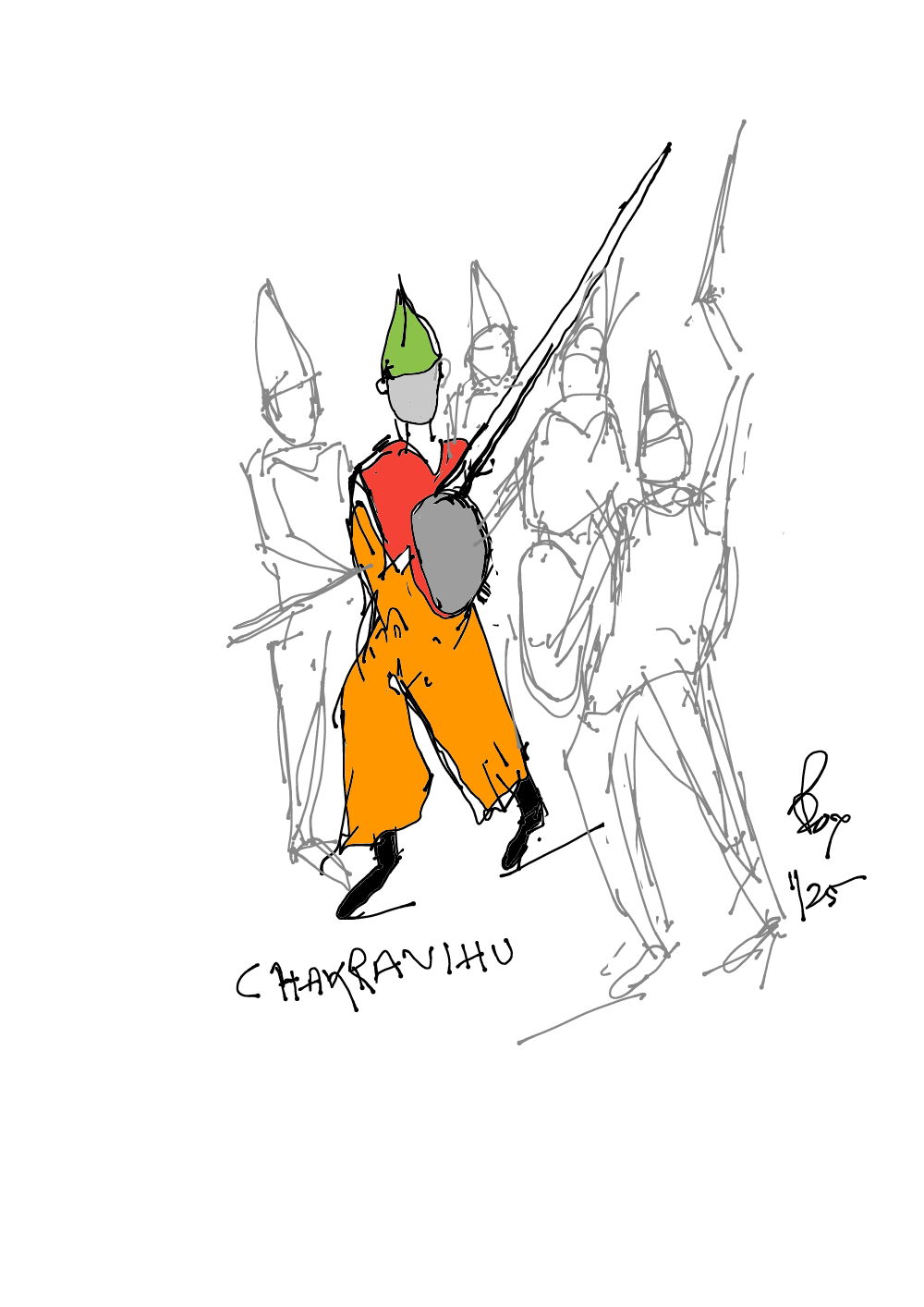
Jayadratha’s moment of revenge came during the Kurukshetra war. On the 13th day, Dronacharya devised the deadly Chakravyuha formation, a labyrinth of warriors that could only be penetrated by someone with expert knowledge. Abhimanyu, Arjuna’s young son, stepped forward, armed with partial knowledge of the formation. He broke into the Chakravyuha but was unable to exit.
Jayadratha played a key role in keeping the Pandavas, especially Arjuna, at bay, ensuring that no one could rescue the valiant Abhimanyu. Inside the formation, Kaurava warriors broke the rules of dharma, attacking the lone Abhimanyu from all sides and stabbing him from behind. The young warrior fought with unmatched valor, but his death left the Pandavas devastated.
Arjuna’s Oath
When Arjuna learned of Abhimanyu’s brutal death, he was overcome with grief and rage. He vowed to kill Jayadratha before sunset on the 14th day of battle. If he failed, he promised to immolate himself, a declaration that raised the stakes for both sides.
Jayadratha, aware of Arjuna’s prowess, spent the next day hiding behind the Kaurava forces, which formed a formidable shield around him. As the day wore on, the Kauravas grew hopeful, while the Pandavas worried about Arjuna’s vow.
The Illusion and the Slaying
As the sun neared the horizon, Jayadratha, believing the day was won, emerged from hiding to mock Arjuna. The Kauravas celebrated prematurely, thinking Arjuna had failed. But Krishna, the divine charioteer and strategist, had one last move. Using his Sudarshan Chakra, Krishna created an illusion of sunset, plunging the battlefield into apparent twilight.
As Jayadratha taunted Arjuna, the illusion lifted, revealing the sun still in the sky. Arjuna, with his unparalleled archery, fired a deadly arrow that severed Jayadratha’s head. Krishna had warned him to aim so that Jayadratha’s head would land in his father’s lap—a boon Jayadratha’s father had granted him, cursing anyone who caused his head to fall to the ground. Arjuna’s precision ensured this, causing Jayadratha’s father to inadvertently drop the head, dying instantly and fulfilling the curse.
Justice Delivered
Jayadratha’s death was not just a personal victory for Arjuna but a moral one for the Pandavas. It restored some sense of justice to the battlefield, avenging Abhimanyu’s untimely death and reinforcing the idea that dharma, though often delayed, ultimately prevails.
Reflections on Greed, Ego, and Retribution
The dice game and the events surrounding Jayadratha’s death underscore timeless lessons. Just as Yudhishthira’s ego led to devastating consequences, Jayadratha’s cowardice and malice brought about his downfall. These stories serve as reminders of human frailty, the perils of unchecked ambition, and the inevitability of karmic justice.
In the Mahabharata, even the noblest characters faltered, but it is through their struggles, mistakes, and redemption that the epic teaches us about the complexities of life and morality.