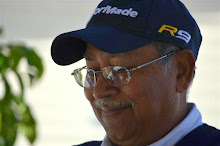
Our driver, Shrinu, was a character straight out of a comedy sketch—jovial, quick-witted, and always ready with a grin that crinkled his eyes. He navigated the hairpin bends with effortless skill, honking cheerfully at passing trucks while regaling us with local tales. About halfway up, as we paused at a viewpoint overlooking a valley of undulating green, I struck up a conversation to pass the time. "Shrinu, tell me about your family," I said, settling back in my seat.
He glanced at me in the rearview mirror, his mustache twitching with amusement. "Ah, sir, simple life for me. One wife, two children—a boy and a girl. They're my world."
I couldn't help but chuckle at the way he emphasized "one wife," as if it were a rare commodity. "Just one? Sounds like you're missing out on the fun!"
Shrinu let out a hearty laugh, winking slyly. "Oh, sir, you laugh now, but in Tamil Nadu, it's not so unusual for the big shots! Look at Karunanidhi—how many wives did he have? And his son Stalin, following in the footsteps. Then there's the film star Kamal Haasan, with his glamorous life and multiple marriages. Once they get rich or famous, they spot a smarter, more educated woman, and boom—the journey begins! Me? I'm happy with my one. Keeps the drama low and the idlis hot."
We both burst into laughter, the SUV echoing with our banter as we continued climbing. Shrinu shared more anecdotes about celebrity scandals, his naughty twinkle making the drive fly by. By the time we crested the hills and entered Ooty proper, the air had turned crisp and invigorating, carrying the scent of eucalyptus and fresh earth. The town unfolded before us: colonial-era bungalows nestled among pine groves, expansive meadows where horses grazed lazily, and tea estates that seemed to cascade down the slopes like green waterfalls. We checked into our cozy cottage, spent the afternoon wandering the botanical gardens, and as evening fell, the hills glowed in hues of orange and pink under the setting sun.
That night, we decided on a quiet dinner at a local restaurant overlooking the lake—a quaint spot with wooden beams and a menu heavy on steaming soups and masala dosas to ward off the chill. As I navigated the dimly lit room to our table, I accidentally bumped into an elderly man leaning on a cane. "Sorry about that," I muttered, then froze. The face looking up at me was familiar, though weathered by time.
"Ram? Is that you?" he said, his voice steady despite his stooped posture.
It hit me—Reddy, from my old days at the Vizag Steel Plant. We hadn't crossed paths in over 30 years. He looked aged, his back bent like a question mark, silver hair thinning, but his eyes were sharp as ever, piercing through the years. I, on the other hand, prided myself on staying upright—my daily walks and yoga sessions had kept the stoop at bay, though gray had crept into my temples too. "Reddy! What a surprise. You recognized me instantly."
He smiled faintly, gripping his stick. "Some faces stick, even after decades. Join me for a bit?"
We sat at his table, catching up on lost time. He was retired now, living quietly in Ooty. As we talked, something peculiar happened. I'd open my mouth to ask about his health, and before the words formed, he'd reply: "The arthritis is manageable with the cool weather here." Or I'd think of inquiring about old colleagues, and he'd preempt: "Most are scattered now—some in Chennai, others abroad." It wasn't constant, just sporadic, like flashes of insight.
I stared at him, puzzled. "Reddy, how are you doing that? It's like you're—"
"Reading your mind?" He finished my sentence with a sad smile. "Yes, I can. But not always. Only sometimes, and mostly with people I know well. I don't know why or how it works, but it does."
I was flabbergasted, my spoon hovering midway to my mouth. The restaurant's hum faded into the background—the clink of plates, the murmur of diners—as I processed this. "That's... incredible. Or terrifying?"
"More the latter," he admitted, his voice dropping. "It's caused nothing but trouble. My wife left me years ago; the kids barely call. You see, when I read their thoughts—especially the unkind ones, the frustrations they hid—I couldn't help but blurt it out. I'd get blunt, confrontational. 'Why are you thinking that about me?' I'd say. It created rifts that never healed. Same with friends—they'd drift away, calling me eerie or untrustworthy."
A wave of sympathy washed over me. How isolating that must be. I started pondering ways to help—maybe connect him with a specialist, or introduce him to support groups.
He chuckled softly, shaking his head. "You can't help me, Ram. I can see it in your mind right now—you're wondering how to fix this."
I nodded, speechless. He leaned back, gazing out at the darkened lake reflecting the hill silhouettes. "I've rented a small flat here in Ooty. The isolation suits me—no new friends, limited contact with relatives. Keeps the noise down."
"But how did this start?" I finally asked, my curiosity overriding the awkwardness.
Reddy sighed, his eyes distant. "It was back at the plant. An accident in the blast furnace—I got too close during a malfunction and inhaled that poisonous gas. Knocked me unconscious for days. They airlifted me to Hyderabad for emergency treatment. When I woke up, everything was... different. Subtle at first—a hunch here, a premonition there. Then it sharpened into actual thoughts from people around me. Doctors called it a neurological quirk from the toxin exposure, but they couldn't explain it. Neither can I."
We parted ways that night with a promise to stay in touch, though I sensed he preferred his solitude amid Ooty's tranquil beauty—the whispering pines, the fragrant tea gardens, the misty meadows that offered a refuge from the world's unspoken chaos. As I walked back through the fog-shrouded streets, the hill range standing silent guard, I couldn't shake the eerie feeling. What a gift, what a curse—to glimpse the hidden minds of those you love, only to lose them in the process. Ooty's serenity had unveiled a story stranger than any mountain mist.
We often envy those who possess extraordinary powers — to see, to know, to hear more than the rest of us. But sometimes, what looks like a gift is, in truth, a quiet tragedy. Reddy’s story was a reminder that perhaps life is kinder when thoughts remain private, and the heart knows only what the lips choose to speak.