
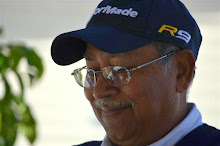
I met him near the walking track—a compact man with a quiet authority, the kind that comes not from words but from years of stirring pots and watching flames. He introduced himself simply as Chawla. A chef. A veteran, as I would soon discover.
Our conversation began, as most meaningful ones do, without design. I mentioned, almost apologetically, that I had been “thinking a lot about butter these days.” He smiled, the knowing smile of a man who has seen obsessions rise and fall like dough.
“Butter,” he said, “is not just food. It is history, mythology, indulgence—and sometimes, sin.”
That intrigued me.
He began not with recipes, but with scriptures. How butter—makhan—was churned from curd in ancient households, the rhythmic motion of the wooden churner echoing like a prayer. He spoke of Krishna, the divine thief, stealing butter from earthen pots, not out of hunger but out of love for its richness. “Why do you think God chose butter?” he asked. “Because it is the essence—the best part extracted with patience.”
I could almost see those pots hanging from the rafters, the child-god reaching out, laughter in his eyes. Butter, in that moment, was no longer an ingredient. It was intimacy.
I told him how, these days, even a simple act—spreading a thick slab of butter over crisp toast—felt like a quiet ceremony. The knife sinking in, the butter resisting for a moment, then yielding… and that first bite, where warmth meets richness. I described it to him as a sensation of going down in a lift—smooth, enveloping, slightly disorienting.
He laughed. “You are already halfway to becoming a chef. You are describing food, not eating it.”
Encouraged, I confessed my childhood indulgence—stealing spoonfuls of butter from the fridge when no one was looking. He nodded, as if this too was part of some universal rite of passage.
Then, like a maestro shifting from philosophy to performance, he began to speak of cooking.
“Take butter chicken,” he said. “People think it is just gravy. No. First, the chicken must earn the butter.” He described the process—marinating, roasting in the tandoor until it carried the memory of fire, then cutting it into pieces. “And then,” he paused, “a generous chunk of white butter… not oil, not ghee… butter.” He cupped his hands as if holding something sacred. “Let it melt slowly, let it sizzle gently. Add herbs, tomatoes, a touch of cream. The butter must not be hurried. It must be allowed to speak.”
I told him about my IIT Kharagpur days—those youthful improvisations. How we would sometimes carry a small lump of butter to the mess and request the cook, almost conspiratorially, to pour it over the humble yellow dal. “Just let it sizzle once,” we would say. And that ordinary dal would transform—its aroma deepening, its taste acquiring a softness that felt almost luxurious.
Chawla laughed heartily. “Ah, you discovered tadka dal with butter before you knew its name!”
He went on to describe it properly—the tempering of cumin, garlic, and red chillies, and then, at the end, that final flourish of butter melting into the dal, binding everything together like a quiet reconciliation.
I shared with him my simplest pleasures—arhar dal with buttered chapatis, a raw onion on the side. Or rice, plain and steaming, with a small knob of butter slowly disappearing into it, leaving behind a fragrance that needed no accompaniment.
At this point, I also confessed to him my discovery of Chicken Kiev during my Ukraine visit in 2003.... Rediscovering it at Tolly Club and my fondness for Chicken Kiev. “A marvel of deception,” I told him. “It looks modest, almost disciplined. But the moment you cut into it, warm butter flows out—silently, generously—like a secret finally revealed.” He nodded appreciatively. “Ah, butter hidden within… that is refinement,” he said. “Not everything has to shout. Some things must surprise.”
He listened with interest, then added his own litany of buttered delights—parathas crisped on the tawa with butter seeping into their layers, pav bhaji finished with an almost theatrical slab of butter, khichdi elevated from convalescent food to comfort by a single spoonful, even a humble corn cob rubbed with butter and salt.
“Butter,” he concluded, “is not just taste. It is emotion. It forgives all roughness. It smoothens life.”
By then, the lights around the sports complex had come on. People were finishing their walks, conversations dissolving into the soft hum of evening. Chawla waved me off with a gentle nod, as if our conversation too had reached its perfect simmer.
I walked back slowly, carrying with me the aroma of butter—not in my hands, but in my thoughts. From Krishna’s चोरी to hostel mischief, from the chef’s practiced hands to my own quiet indulgences, and now even to a Ukrainian table, butter had revealed itself as more than an ingredient. It was memory, comfort, and a quiet accomplice in life’s small joys.
And somewhere along the way, I couldn’t help smiling at a different kind of butter altogether. No wonder, I thought, the word “buttering” has found its place in our language as a gentle art of pleasing those in power. After all, what butter does to food—softening edges, enhancing appeal, making everything more agreeable—is perhaps exactly what a few well-chosen words do to a human ego. In my long years of service, I have seen many such “culinary experts” who never entered a kitchen, yet knew exactly where and how to apply butter!
But another companion was waiting for me.
On my dining table lay my unfinished copy of Butter by Asako Yuzuki, almost as if it had been patiently holding its breath. I hurried back, settled into my chair, and placed the book on my reading stand—leaning comfortably into its familiar grip, like an old friend holding me steady.
Outside, the night settled quietly over Delhi. Inside, with the book open and my mind still flavoured with butter—from scriptures to street, from hostel to home, and even across continents—I resumed my journey.
And this time, I read not just with my eyes, but with a lingering taste on my tongue.


2 comments:
Wonderful contribution sir. Historical research on butter from dwapar to present times and importance interms of taste and value addition.
However in corporate world it is also summarised to influence boss with flattery and jeopardize decision making. Kind regards 🌷🙏🏽
However on lighter side :
- *रेत को खेत कहो बांस को बेंत कहो*
- *मक्खन खाना जरूरी नहीं, जरूरी है मक्खन लगाना*
An absolutely delightful read...
Post a Comment