Showing posts with label Birbal. Show all posts

Wednesday, August 27, 2025

The Utopian Case of Tudu Hembram


Rethinking Talent Retention: The Utopian Case of Tudu Hembram

In the remote district of Purulia, among the Santhal tribe, I once met a boy named Tudu Hembram. I was introduced to him at Bhalopahar by the late philanthropist Kamal Chakraborty. At that time, he had just finished school and was repairing computers at a local shop. Yet, it was clear his mind was sharper than the hardware he worked on—his interest lay in the abstract beauty of software and mathematics.

Tudu had submitted some of his calculations online, and his ingenuity soon attracted the attention of a Bangalore startup. That is where his story takes an unusual turn, and one that made me reflect deeply.

Unlike most young professionals who chase salaries, savings, and possessions, Tudu followed a different model of existence. He did not draw a salary in the conventional sense. Instead, the company ensured that his family in Purulia was looked after—sending them monthly expenses and arranging medical support whenever needed. His personal requirements—whether food, clothing, or toiletries—were fulfilled through a custom app designed just for him, where he could simply click for his needs. He lived in a modest studio apartment equipped with cutting-edge computers, free from financial anxieties, with his only wealth being his knowledge.

This freedom allowed Tudu to focus entirely on his passion: finding economic ways to use AI. While most engineers are busy advancing AI systems, his goal was to democratize technology, creating simple solutions for small businesses—chatbots for individuals, smart tools for shopkeepers, and even the dream of one day bringing his own village “into the cloud” when satellite internet becomes universally available.

Despite his ascetic lifestyle, Tudu maintained a balance between mind and body, running 10 kilometers each morning to keep fit. His was a life of discipline, simplicity, and purpose.

History reminds us that this is not a new idea. Emperor Akbar maintained his famed Navaratnas—nine jewels of talent—at state expense, among them the legendary Tansen, whose music still echoes through centuries, and Birbal, whose wit and wisdom guided the emperor. Across civilizations, rulers understood that genius blooms only when freed from material burdens.

In ancient Greece, Plato’s Academy and later Aristotle’s Lyceum were supported by patrons who ensured philosophers could devote themselves to thought rather than livelihood. In Renaissance Italy, the Medici family sustained a galaxy of talents—Leonardo da Vinci, Michelangelo, Galileo—by providing them with security, resources, and freedom from financial anxieties. Their patronage birthed some of humanity’s greatest art, science, and philosophy.

The modern world, however, runs on different aspirations. The symbols of success today are big cars, larger houses, and foreign holidays. For a talented individual, the temptation to trade passion for possessions is ever-present. This eternal conflict between the needs of the body and the aspirations of the mind has never disappeared. To resist worldly goods and stick to one’s calling requires unusual inner strength—and equally unusual external support.

What struck me most in Tudu’s case was the company’s unconventional way of retaining him. By removing the burden of salary negotiations, financial planning, and family obligations, they gave him what every true thinker craves—freedom from worry. Many bright minds abandon high-pressure jobs to care for families or escape stress. This model seemed to offer a new path: one where the company assumes responsibility for life’s necessities, while the individual devotes himself fully to creation and problem-solving.

It reminded me of Japan, where young people increasingly choose a solitary lifestyle, avoiding the noise of society, yet deliver extraordinary results in their fields. Tudu’s life felt like an Indian echo of that philosophy: minimalism, focus, and brilliance.

The question that lingers is profound: Could this be the future of work? Instead of higher paychecks and perks, perhaps the real key to nurturing genius is designing ecosystems of trust, care, and freedom.

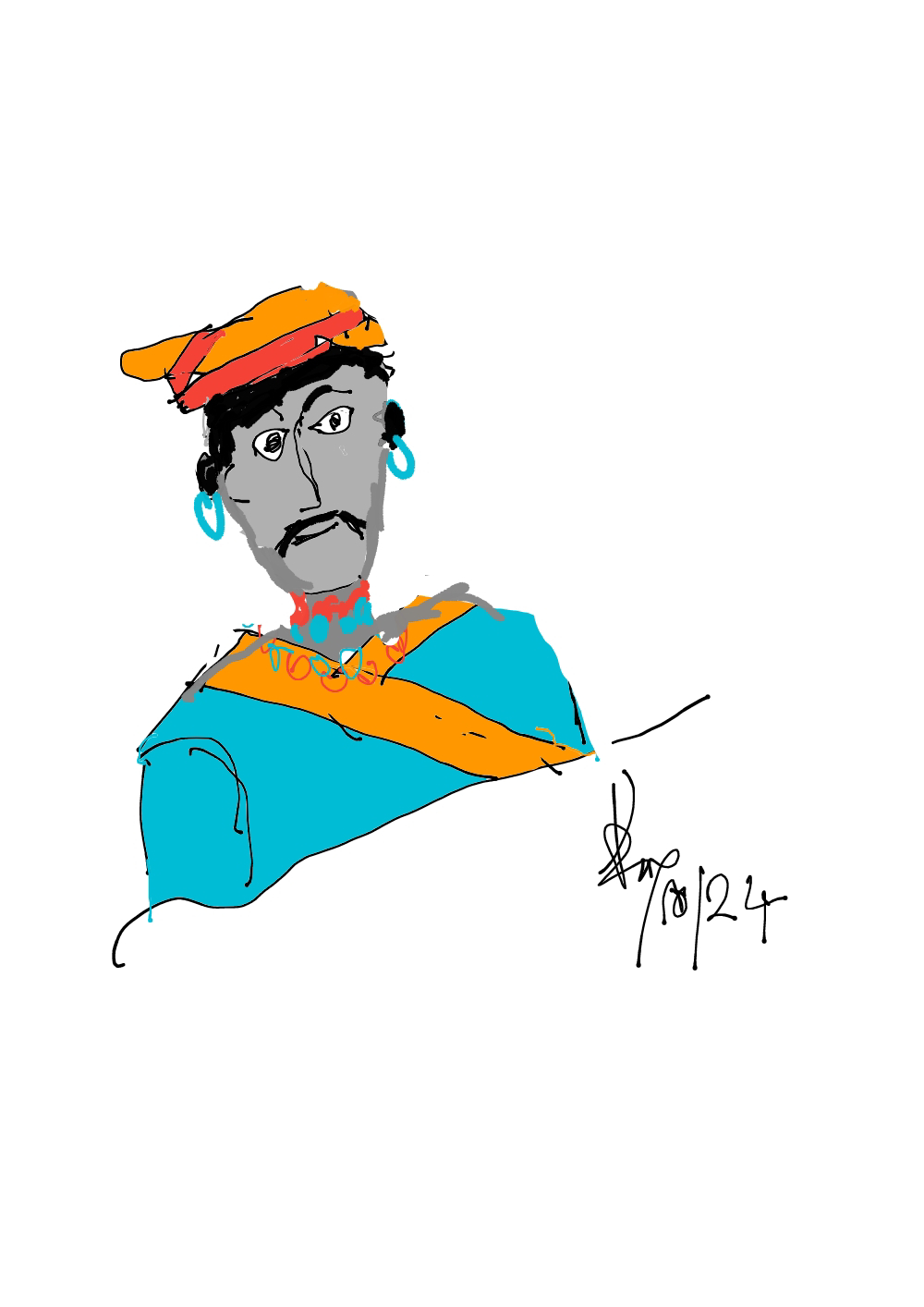
Afterthought: This story is a utopian thought experiment. No such company exists today—but perhaps it is an idea whose time will come.


Friday, October 11, 2024

The history of Birbal retold


In the quaint village of Tikawan, near Kalpi, a young Mahabir grew up with an insatiable curiosity and a sharp mind. His Braja Bhasa teacher, Panditji, marveled at Mahabir's quick grasp of languages and mathematics. The villagers soon recognized the clever boy's talent for trouble-shooting.

One day, the local oil presser, Lala, complained about thieves stealing his precious mustard oil. Mahabir, then just 12, offered to help. He observed the presser's daily routine, analyzed the theft patterns, and set a trap. The thieves were caught, and Lala's gratitude earned Mahabir the nickname "Chatur" (clever one).

Mahabir's mathematical skills also helped expose the village grocer's deceitful practices. The grocer would mix stone particles with rice to increase his profits. Mahabir calculated the discrepancy in weights and measurements, revealing the scam. The villagers applauded his ingenuity.

As Mahabir grew older, his reputation spread. Village elders sought his counsel to resolve disputes. He learned Persian from local mullahs, broadening his linguistic skills.

Years passed, and Mahabir's exceptional abilities caught the attention of Emperor Akbar's courtiers. Summoned to Agra, Mahabir became Birbal, one of the Navaratnas.

My childhood friend Pushkar, a descendant of Khubchand, would often regale me with tales of Birbal's exploits during our school days. He spoke of how Birbal's cleverness had earned him a place in Akbar's court and how Khubchand had supplied firewood, tallow, and other essentials to the Mughal soldiers.

As the Mughal army marched from Agra to Jodhpur, Khubchand joined the entourage. The grand procession was a sight to behold:

At the forefront, horse riders led the way, clearing the path and securing the surroundings. Behind them, Akbar himself rode atop a majestic elephant, a symbol of his power and authority. Following closely were his trusted Navaratnas, including Birbal, Tansen, and Abul Fazl, each mounted on elephants.

Next in line were the foot soldiers, armed with swords, spears, and dhal (shields). These brave warriors formed the backbone of the Mughal army. Make-shift kaccha roads were built to facilitate their passage, as established roads were scarce.

Akbar's chief strategist, Man Singh, planned the army's movements, wisely advising against marching during the scorching hot sun. Day journeys with restful nights ensured the army remained fresh and alert.

When the soldiers pitched their tents, merchants would set up a bustling market at a distance. The aroma of roasted meats, freshly baked bread, and spices wafted through the air, enticing soldiers and local villagers. This impromptu marketplace transformed into a vibrant Mela, with villagers and soldiers mingling freely.

Birbal's presence ensured peace and harmony, as he mediated disputes and maintained order. Akbar, pleased with the cordial atmosphere, would sometimes invite Tansen to perform. Tansen's soulful renditions of various ragas would mesmerize the emperor, soldiers, and villagers.

One evening, Akbar asked Birbal, "What is the difference between a wise man and a fool?" Birbal replied, "A wise man learns from others' mistakes, while a fool learns from his own." Akbar smiled, acknowledging Birbal's insightful answer.

On another occasion, Akbar asked Birbal to find the cleverest man in the kingdom. Birbal returned with a humble farmer who had wisely divided his land among his quarrelsome sons, stipulating that each son must cultivate the land together, ensuring unity.

Akbar was impressed by Birbal's choice and asked how he had selected the farmer. Birbal explained that the farmer's innovative solution demonstrated wisdom and understanding of human nature.

During their journey, Akbar once asked Birbal four questions:

1. What is the most valuable thing in the world?

2. What is the fastest thing in the world?

3. What is the biggest thing in the world?

4. What is the most numerous thing in the world?

Birbal replied:

1. The most valuable thing is knowledge.

2. The fastest thing is the mind.

3. The biggest thing is the universe.

4. The most numerous thing is stupidity.

Akbar was delighted with Birbal's thoughtful answers.

Another time, Akbar asked Birbal to find a solution for the kingdom's water scarcity. Birbal suggested building small check dams to conserve rainwater and harvest dew. Akbar implemented the plan, alleviating the water crisis.

When Akbar asked Birbal, "What should a king do when his people are unhappy?" Birbal replied, "He should either change his policies or change his people." Akbar appreciated Birbal's candid advice.


As the Mughal army approached Jodhpur, Birbal reflected on his journey from Tikawan to the imperial court. His childhood experiences had prepared him for the complexities of statecraft.

Decades later, Pushkar, now a cunning lawyer, would exploit our ancestral connections for personal gain, gobbling up a portion of our ancestral house in Allahabad. I couldn't help but contrast Pushkar's deceitful nature with the integrity of Birbal, the clever boy from Tikawan.

Years passed, and Birbal's legend grew. His wit and wisdom became synonymous with justice and fairness. Akbar's court was transformed by Birbal's presence, and the emperor's reign was marked by unprecedented peace and prosperity.

One day, as Birbal prepared to leave Akbar's court, the emperor approached him with tears in his eyes. "Birbal, my friend and advisor, what can I gift you for your years of service?" Birbal smiled, "Your Majesty, my reward lies in the smiles of the people, the prosperity of the kingdom, and the memories we've shared."

Akbar nodded, understanding Birbal's humility. "Then, let me build a monument in your honor, where future generations will remember your wisdom and wit." Birbal declined, "No, Your Majesty, my legacy lies in the hearts of the people, not in stone or marble."

And so, Birbal returned to Tikawan, his village, where he spent his final days surrounded by loved ones, sharing tales of his adventures and imparting wisdom to the next generation.

The story of Birbal serves as a reminder that true greatness lies not in wealth or power but in the positive impact we have on others' lives.

Epilogue:

I sat with Pushkar, now an old man, reminiscing about our childhood days. He looked at me with a tinge of regret, "I wish I had followed Birbal's path, my friend." I smiled, "It's never too late, Pushkar. Share Birbal's stories with your grandchildren, and perhaps they'll learn from his wisdom."

As I left Allahabad, I couldn't help but wonder: what if Pushkar had followed Birbal's example? Perhaps our ancestral house would still be intact, and Pushkar's legacy would be one of integrity, not deceit.

But Birbal's story remains, a beacon of hope, inspiring generations to come.
I have twisted the history about end of Birbal,he was assassinated by jealous courtiers of Akbar as per some historians. As the historians were not present during that period of 16th century  so they used circumstantial evidences from various Urdu and Hindi manuscripts to conclude, hence I used my imagination to give a happy ending.

---