Showing posts with label Indo Pak war. Show all posts

Saturday, September 19, 2026

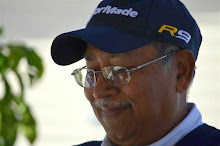
From the skies over Kalaikunda in ’65 to a Christmas table in Australia decades later — remembering Flight Lieutenant Alfred Tyrone Cooke, VrC. A true Bull who flew with nerve, humour, and heart. Rest easy, Sir.

Back in 1965, freshly minted out of IIT Kharagpur and still smelling faintly of lecture halls and late-night chai, I rocked up at Indian Oil’s Gauhati Refinery as a shiny new Engineer Trainee. Full of diagrams, differential equations and the quiet confidence of someone who had never yet met a real crisis. Naturally the universe decided that was the perfect moment to start a war right across the border in what was then East Pakistan.

My carefully prepared job description lasted about five minutes. One day I was poring over process flow sheets; the next I was a civil-defence volunteer, scrambling around with sandbags and wondering whether the emergency siren meant “take cover” or “lunch is ready.”

It properly kicked off on 6 August. We looked up and there they were — Pakistan Air Force fighters swooping low over the refinery like they owned the place. Luckily the army had thoughtfully parked a couple of anti-aircraft guns on the nearby hillocks. Those guns barked once, barked twice, and the uninvited guests remembered they had urgent business elsewhere. We all pretended we hadn’t been holding our breath.

By September the whole thing had turned into a full-scale drama. My junior friend Raghunathan, still stuck at IIT Kharagpur, later swore that he and the hostel boys had front-row seats to actual dogfights. Indian and Pakistani jets were buzzing past so low they were practically at eye-level with the third-floor balcony. Engineering lectures never stood a chance against that sort of entertainment.

Fast-forward a few decades and the circle closed in the most unexpected place: a Christmas lunch at Keith and Maureen Mitchell’s house in Australia. About ten years ago now. Keith, bless him, had rounded up a few Anglo-Indian expats for the usual festive feast. Among them sat a quiet, unassuming chap introduced simply as Alfred Cook. Only later did the full name drop: Flight Lieutenant Alfred Tyrone Cooke, VrC — the same man who had been dancing with Sabres over Kalaikunda while Raghunathan and the IIT boys were watching from the rooftops.

There we were — me (Roy), Keith (ex-RAF, so of course he had opinions about everything with wings), my son Anish, and Alfred himself — around the table while the turkey cooled and the crackers waited. Alfred started talking about 7 September 1965 as if it had happened last Tuesday. No. 14 Squadron, “The Bulls.” Hawker Hunter. Combat air patrol. Then suddenly four (or was it six?) PAF F-86 Sabres were all over Kalaikunda airfield and the sky turned into a low-level free-for-all that the IIT students later described like a cricket match they could actually see.

Anish, wide-eyed, leaned forward: “Uncle, you were only twenty-six. What on earth was going through your head?”

Alfred gave that half-smile of his. “Honestly? Mostly ‘Don’t let the wingtip hit the trees.’ We were so low I could practically read the name painted on the other chap’s helmet. Sabres turn tighter, Hunters go faster — so you use what you’ve got. One moment you’re chasing, the next someone’s on your tail, and your own anti-aircraft guns are cheerfully shooting at everyone including you. You don’t really think about being twenty-six and full of energy for the nation. You just fly the aeroplane and try not to become a permanent part of the landscape.”

Keith, never one to miss a technical opening, jumped in: “Those 30-mil Aden guns — rate of fire, ammunition load, how long before you were dry?”

Alfred chuckled. “Long enough to put one Sabre into the ground — Flying Officer Afzal Khan, I later learned — and mess up another so badly that Flight Lieutenant Tariq Habeeb just about staggered back to Tezgaon and wrote the thing off. Then the third one… well, the gun stopped answering. So I stayed on his tail anyway, waving the empty aeroplane at him until he decided East Pakistan looked safer. Ten minutes that felt like a lifetime. And I’d started the day on an empty stomach because the breakfast van had come and gone without leaving me so much as a biscuit.”

We all laughed, even though none of it was funny at the time. Anish kept asking about the adrenaline, the fear, the sheer cheek of it. Keith kept asking about energy management and deflection shooting. I just sat there thinking: this is the same sky Raghunathan watched from a hostel roof, and the same man is now politely refusing a second helping of pudding while describing how he once ran out of bullets and kept fighting with pure attitude.

Alfred later gifted that Vir Chakra back to his squadron in 2015. “It belongs to the Bulls,” he said. Classic him.

So it was with a genuinely heavy heart that I heard from Keith the other day: Flight Lieutenant Alfred Tyrone Cooke passed away on 18 September 2026 at Base Hospital, New Delhi, aged 87. The Indian Air Force paid its respects the same day. One of their finest.

From watching those first jets buzz over Gauhati as a wide-eyed trainee, to sitting at Keith and Maureen’s table ten years ago listening to the man who owned those very skies describe the dogfight while we passed the cranberry sauce — life does have a way of delivering history right to your doorstep, usually with a side of Christmas pudding.

Rest easy, Flt Lt Cooke. You flew the aeroplane. And you made the rest of us look up.

Saturday, October 11, 2025

The Song Before the Gunfire


A Song Before the Gunfire  
*A Cherished Unfinished Memory*  

Whenever I meet someone new, I prefer to watch from a distance before approaching. If the person seems easygoing—smiling, perhaps with a book in hand—I take it as a sign from fate that a good conversation awaits. For a storyteller, life is an infinite anthology, and strangers are just unwritten pages.  

I still remember my early days at the Gauhati Refinery of Indian Oil Corporation. Back then, there was no direct broad-gauge line to Gauhati. The route took you from Delhi to Barauni by broad gauge, and then onward by meter gauge to Gauhati. Today’s seamless rail connections are faster, but they lack the gentle rhythm of those journeys, the leisurely stations, and—most of all—the companionship of shared travel.  

In those first-class compartments, often two of the four berths were taken by army officers. It was 1965, and Assam, bordering East Pakistan, had a strong military presence. The Assam Mail seemed half train, half khaki-clad convoy—officers on transfer, soldiers returning from leave, and young recruits with duffel bags full of hope and apprehension.  

One journey stands out vividly. I was placed in a two-berth coupé alongside a young army officer, Lieutenant Anand. He was barely past twenty-three, bright-eyed, and brimming with mischief. Within minutes of settling in, he pulled from his wallet a well-handled photograph—a young woman smiling with both shyness and affection.  

“Her name’s Meera,” he said warmly. “She still calls me ‘Anu.’ Military enough for the kitchen, but not for the parade ground.”  

I smiled. “Nicknames are medals of the heart. Far more precious than the ones issued officially.”  

Over dinner—chicken, chapatis, and a pudding of uncertain color—Anand produced a bottle of Old Tavern rum. “Officer’s ration,” he announced with mock ceremony. “For high morale in low spirits.”  

He then spoke of Meera—how they met at Delhi University, how she loved romantic songs, especially the haunting melody Kishore Kumar had sung in *Mr. X in Bombay* the year before: *“Mere Mehboob Qayamat Hogi…”* He said it was “their” song, playful yet tinged with longing.  

As he spoke, a memory flitted across my mind—a story from the Delhi newspapers in 1964. An army officer had shot his girlfriend in a café after a breakup. The café’s jukebox had been playing *“Mere Mehboob Qayamat Hogi”* when it happened. That detail had haunted me ever since—the cruel dissonance between a song’s tender yearning and the violence that followed it.  

Listening to Anand, I found myself silently praying that his tale would not echo that tragedy. His laughter was bright, but that memory reminded me how easily love can turn fragile under the weight of absence and fear.  

“You’re thinking like a writer again, aren’t you?” he asked, noticing my quietness.  

“Perhaps,” I admitted. “Writers can’t help seeing storms in calm waters.”  

He lifted his glass with a grin. “Then let’s drink before the rain begins.”  

By morning, Gauhati appeared through mist and drizzle. On the platform, Anand adjusted his cap, shook my hand, and said, “If you ever write about me, make me sound brave—but human.”  

“That’s the only kind I know how to write,” I replied.  

We parted as travelers often do—with an unspoken promise and a friendship destined to live only between stations.  

When the War Came  

Later that year, war arrived.  

One evening at the refinery officers’ club, we were mid-game in badminton when the siren wailed. The shuttlecock froze midair as someone shouted, “Enemy aircraft!” The generators went off instantly, plunging the compound into darkness. Then the two anti-aircraft guns stationed on the hills beside the refinery roared to life.  

Tracer shells streaked upward, weaving fiery paths across the night sky. The air shuddered with sound and courage. We dropped flat on the court as our guns kept firing. Moments later, Indian fighter jets thundered overhead, streaking through the clouds in pursuit of the intruders.  

When silence finally returned, no one moved. The officers’ club lights stayed off, and the dark seemed to hum with memory. I lay staring at the stars, my mind turning to Lieutenant Anand—somewhere beyond those hills, perhaps crouched behind his own gun, maybe thinking of Meera and that photograph he carried.  

And faintly, from the corners of remembrance, I could almost hear Kishore Kumar’s voice echoing: *“Mere Mehboob Qayamat Hogi…”*  

War, I realized, doesn’t just destroy—it interrupts. It cuts short songs, conversations, dreams unfinished.  

That night, as tracer smoke faded into silence, I sent a quiet wish into the sky for him—that his story would not end in gunfire, but continue softly, like a song still playing long after the jukebox has stopped.  

And that is how I remember him—not just a soldier I once met on a train, but a note suspended between love and duty, somewhere in the melody of an unfinished memory.  

---