TAGLINE (Ted's voiceover as credits roll):
"In football as in life — it's not just about scoring goals. It’s about showing up, passing the ball, and sometimes… drinking tea you don’t even like, just to say you tried."
Travel and interesting subjects
"In football as in life — it's not just about scoring goals. It’s about showing up, passing the ball, and sometimes… drinking tea you don’t even like, just to say you tried."
ভরা থাক, ভরা থাক... স্মৃতিসুধায় বিদায়ের পাত্রখানি
এই গানটা যখন প্রথম শুনি, তখন ঠিক যেন কোথা থেকে এসে আমার ভেতরটায় ঢুকে পড়ে। মনে আছে, ১৯৯৭ সালের কথা। আমাদের সহকর্মী দীপকের বিদায় সংবর্ধনা চলছিল অফিসে। বিদায়ের মুহূর্ত এমনিতেই একটু গুমোট হয়ে থাকে। হাসি-মজার আড়ালে কোথাও একটা হালকা বিষাদের সুর লুকিয়ে থাকে।
কিন্তু সেদিন, দীপক হঠাৎ গেয়ে উঠল—"ভরা থাক, ভরা থাক স্মৃতিসুধায় বিদায়ের পাত্রখানি..."
আমার মনে হয়, ওই মুহূর্তেই গানটা আমার নিজের হয়ে গেল। দীপকের গলার মধ্যে কোনো পেশাদারি ছিল না, তবুও যেন একরাশ আবেগ আর আন্তরিকতা মিশে গিয়েছিল। ওর কণ্ঠে গানটার যে আবেদন ছিল, সেটা নিখুঁত গায়ন দিয়ে বোঝানো যাবে না। সেটা ছিল হৃদয়ের সুর।
সেই গানটা যেন বলছিল—বিদায় মানেই ফাঁকা কিছু নয়, বরং যা কিছু পেয়েছি সেইসব স্মৃতির সুধায় ওই শূন্যতা ভরে তোলাই তো আসল উদ্দেশ্য। গানটা যেন অনুরোধ করছিল, “চলে যাচ্ছি ঠিকই, কিন্তু মনে রাখিস, সময়টুকু যেন ফেলে দিস না… সেটা যেন ভালোবাসা আর স্নেহে ভরে থাকে।”
সেদিন অফিস থেকে ফেরার পথে, গড়িয়াহাটে গিয়ে কিনে ফেললাম দেবব্রত বিশ্বাসের রবীন্দ্রসঙ্গীতের একটা ক্যাসেট। খুব ইচ্ছা ছিল আবার শুনব ওই গানটা—শুধু শ্রুতির জন্য নয়, অনুভবের জন্য।
আজও মাঝে মাঝে গানটা শুনি। বয়সের সঙ্গে সঙ্গে জীবনের অভিজ্ঞতা বাড়ে, জায়গা পাল্টায়, মানুষ আসে যায়, কিন্তু এই গানটা থেকে যায়, একইরকম ভাবে। বারবার মনে করিয়ে দেয়—জীবনে পাওয়া-না-পাওয়ার হিসেবের বাইরে, কিছু মুহূর্তই আসলে আমাদের ভেতরটা ভরিয়ে দেয়।
এখন যখন গানটা শুনি, একা বসে, চোখ বন্ধ করে—তখন মনে হয়, জীবনের এতগুলো বছর পেরিয়ে এসেও কিছু কথা ঠিক আগের মতোই সত্যি।
"ভরা থাক, ভরা থাক..."—এই লাইনটা যেন নিজের মনকেই বোঝানো, যেন নিজেকে বলা—সব কিছু হয়তো রোজ পাওয়া যাবে না, কিন্তু হৃদয়টা যেন খালি না হয়।
এখন বুঝি, গানটা সেদিন শুধু দীপকের বিদায়ের গান ছিল না। সেটাও ছিল, কিন্তু তার বাইরেও এটা ছিল একটা জীবনদর্শন। যেকোনো বিচ্ছেদ, যেকোনো সমাপ্তি—তা ব্যক্তিগত হোক বা পেশাগত—তাকে যদি আমরা স্মৃতির সুধায় ভরতে পারি, তাহলে শূন্যতা আর নিঃসঙ্গতা কিছুটা হলেও সান্ত্বনা পায়।
আমরা সবাই চুপিচুপি এমন কিছু রেখে যেতে চাই যা আমাদের চলে যাওয়ার পরেও থেকে যাবে। হয়তো কেউ মনে করে বলবে, “ওর সঙ্গে কাটানো দিনগুলো ভুলব না…” সেই বাক্যটাই তো আসল সার্থকতা।
আর তাই আজও, বিদায় বলার সময় মনে মনে গেয়ে ফেলি—
"ভরা থাক, ভরা থাক স্মৃতিসুধায় বিদায়ের পাত্রখানি..."
সমরেন্দ্র নাথ রায়
Changi Airport, Singapore — the unofficial United Nations of layovers. I was marooned at Gate C34 thanks to a mysterious "technical delay" that airlines announce with the same expression you'd use for a missing umbrella. My wife, Madhuri, had drifted away into the glittery forest of duty-free stores. Perfume testers, scarves, ceramic mugs—anything but what we actually needed.
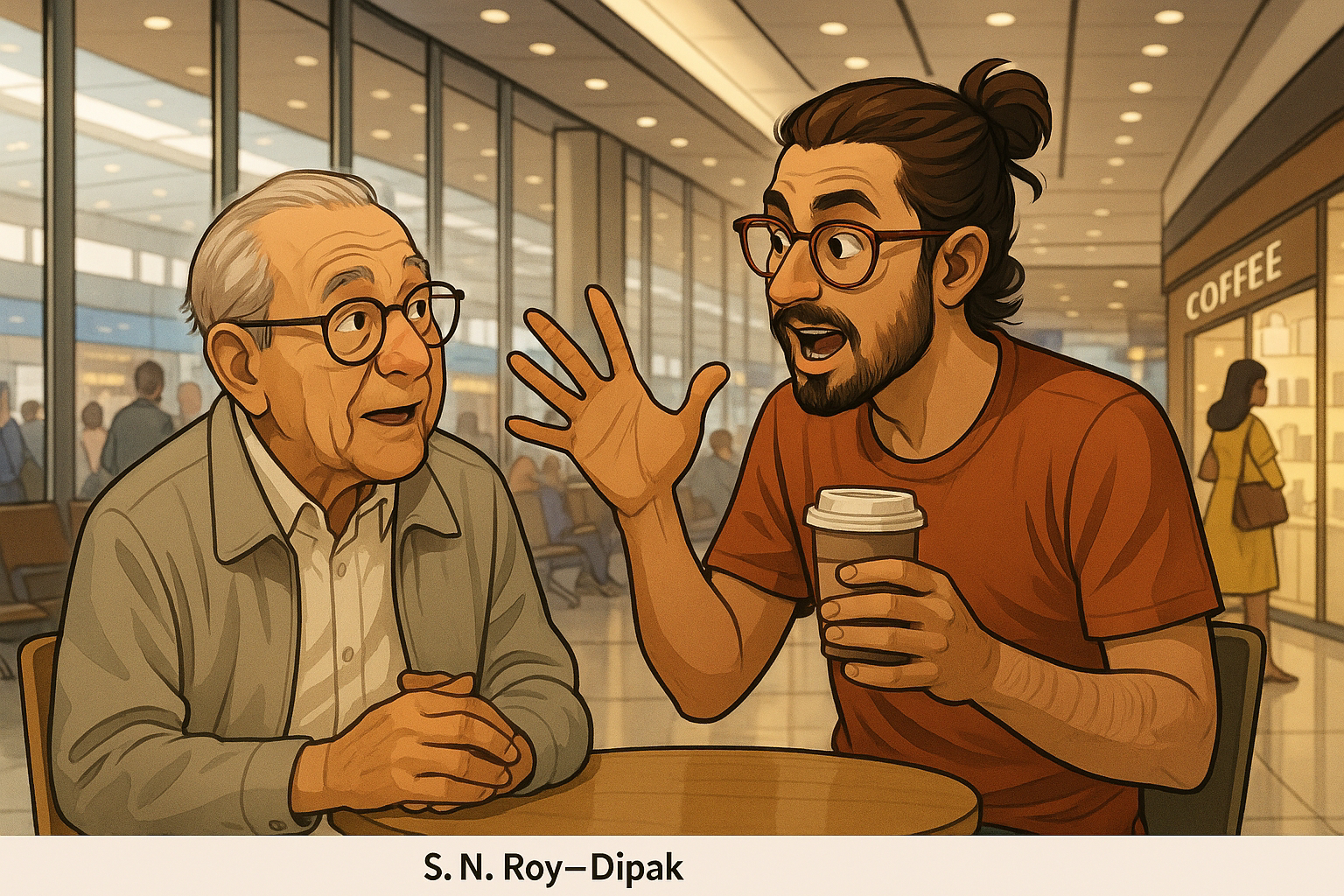
I settled down with a kopi o kosong and opened my Desh magazine. That’s when he entered my life—like a character in one of my short stories who doesn't knock, just appears and makes the story move.
A slim young man with a disheveled man-bun, red-rimmed glasses, and a T-shirt that read “Make Cinema, Not Excuses” flopped beside me with dramatic exhaustion. He held a Starbucks cup and a laptop covered with festival stickers like Dhaka Shorts ’22 and Cannes Rejects Anonymous.
“Bengali, sir?” he asked, eyeing the Desh.
I nodded. He smiled. And with that, my peaceful layover morphed into a pitch meeting.
His name was Dipak, but he preferred “D. Sen.”
“Short, punchy, like Ray or Nolan,” he said. “You must become a brand, sir, before the world gives you a budget.”
He was returning from Singapore, triumphantly clasping a verbal promise of ₹20 lakhs from two IT engineers with deep pockets and shallow cinema knowledge.
“Once I have 40, I start shooting,” he beamed. “It’s a noir-thriller. Bit of ghost, bit of revenge, social commentary woven in. Set in Kolkata. Very rain-washed. Monochrome filters. And one slow Rabindra Sangeet track played on saxophone.”
He spoke like he was already walking the red carpet.
I felt the itch, that secret fantasy of mine—that one of my short stories would one day leap onto the silver screen. I casually mentioned I’d written a few.
He pounced.
“Sir! Let me use one of them. As a flashback. A pivotal incident! I’ll montage it like Nolan but rooted. Grounded. Bengali.”
I leaned in. “If I pitch in with ₹5 lakhs, what do I get?”
He looked around dramatically and whispered like a man offering a banned substance.
“If your funds are a little… ahem… grey, we’ll return it shiny and white. Also, I’ll cast you. Or better—your whole golf group! I'll write a golf scene into the script. Like Srijit did in Zulfiqar.”
I was curious.
“Hero? Heroine? Who’s acting in this?”
He sipped his latte. “Sir, these days heroes pay to become heroes. I know a couple of rich Bengali kids with six-packs and no jobs.”
“Heroine?”
“Modeling girls. Very camera-friendly. Also pitching in.”
“Character actors?”
“Faded TV stars. 2,000–3,000 rupees per day. They just want work and fish cutlets.”
“Crew? Lights? Sound? Editing?”
He shrugged, smiling. “Sir, the industry’s starving. Crews are sitting idle. You offer chai and a meal, they’ll shoot a dream sequence at midnight.”
“And special effects?”
“I’ve got a friend in Bangalore. IT guy. Worked on a Hollywood VFX project. He made a pigeon explode for a Malayalam movie. He’ll help with my ghost golf ball.”
I raised an eyebrow. “You sound confident. But do you really think people will watch this?”
He lit up. “Sir! Have you seen Supermen of Malegaon?”
“Of course! Those Malegaon boys made a Superman parody using bamboo sticks and dupattas.”
He slapped the table with joy, almost spilling his coffee.
“Exactly, sir! No training, no studio, no nothing—just dreams. They made magic with mosquito nets and car horns. If they could make people laugh and cry with one lakh, then why can’t I make a noir ghost thriller with forty?”
He leaned in like a director giving a final shot instruction:
“Sir, Malegaon gave us hope. I have WiFi, passion, and a VFX guy. What else do I need?”
I said, “Luck. And maybe another ₹15 lakhs.”
He nodded solemnly. “That too.”
Just then, Madhuri returned with a bag of suspiciously expensive Singaporean biscuits and that all-knowing look wives carry like a handbag.
“Who’s this?” she asked.
“Just someone I met,” I said coolly. “He was explaining GST.”
She squinted. Dipak faded away like a skilled junior artist, blending into the crowd near the noodle counter.
Back home, a WhatsApp popped up from an unknown number: a digital poster that read:
🎬 Ghorer Bhut Golf Khele
A noir thriller by D. Sen
Starring Raja Roy as “The Swinging Spirit”
Coming soon (pending funding)
I showed it to my golfing buddies—Jaggi, Sikka, Paul. They laughed for five minutes straight. Then Paul leaned over and said,
“Oye Roy, you think they’ll cast me as the caddy ghost if I pitch in ten lakhs?”
Ah, cinema dreams. Once it bites, even spirits start queuing for auditions.
My IIT batchmate Himanshu, always the practical voice of reason, reminded me recently: “Enjoy the pollution-free air and blue sky of Australia while you can—once you return to Kolkata, it’ll be muggy skies and auto exhaust.”
That comment stuck with me.
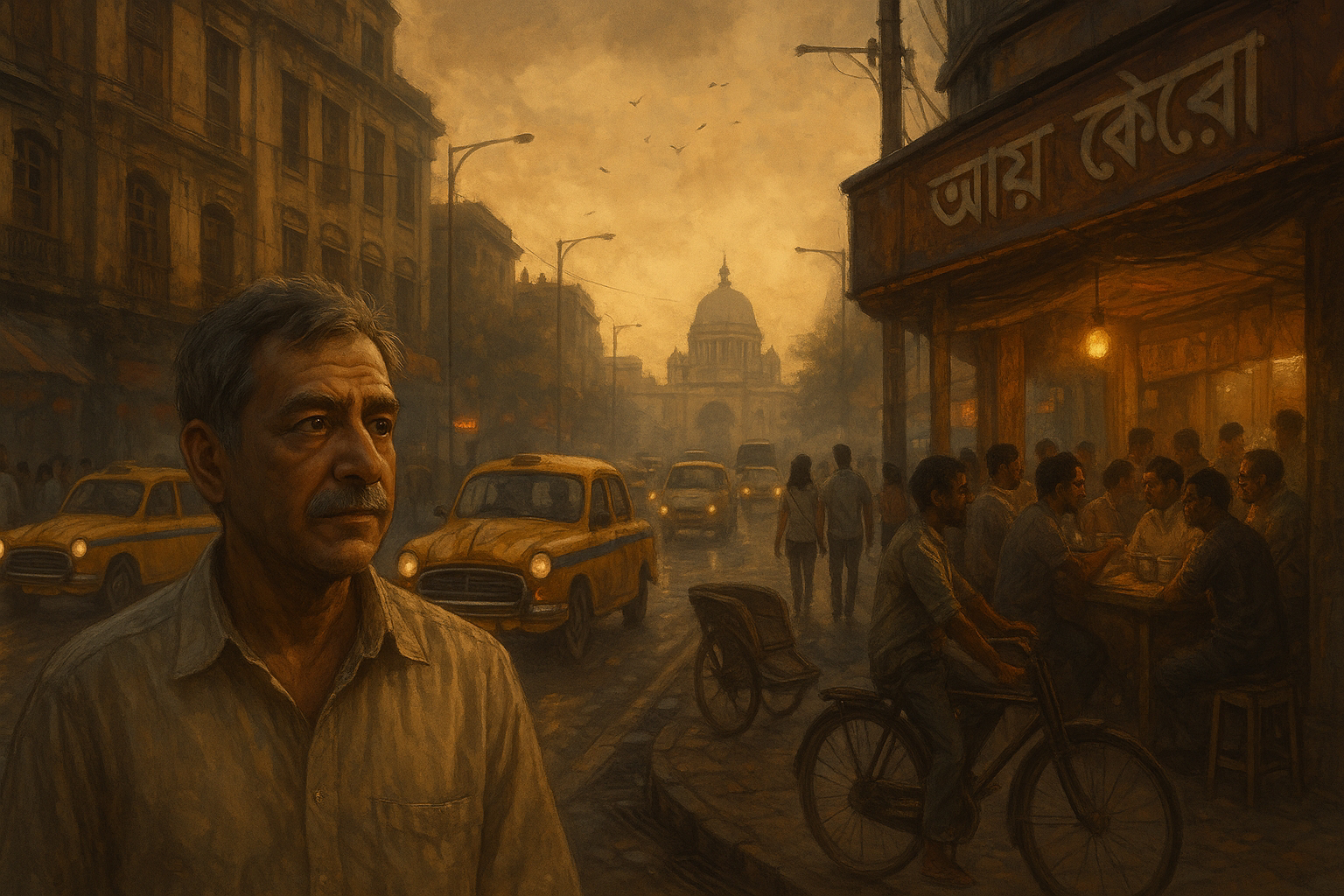
And so, instead of getting offended, I got inspired. I sat down with a flat white in hand, stared out at the impossibly blue Queensland sky—and penned this little tribute to the chaos I love, the mess I miss, and the madness that makes Kolkata feel like home.
It’s 7:15 a.m. in Upper Coomera, Australia. The kookaburras are laughing outside my window, the sky is perfectly blue, the traffic is polite, and the air smells faintly of eucalyptus and organic floor cleaner.
And me?
I’m sitting on a Scandinavian-designed ergonomic chair with lumbar support, sipping a flat white, and missing my old, rusty bed in Kolkata like it’s a long-lost friend.
Not the memory foam mattress here that judges me for every turn—but my creaky, no-nonsense wooden bed with a hump in the middle. The kind that doubles up as a musical instrument when you shift position. You don’t sleep on that bed—you negotiate.
And oh, my high-cushioned sofa, positioned like a throne in front of the TV back home. The kind of sofa that swallows you whole, along with any plans of being productive. It's probably still bearing the exact imprint of my body, slightly concave, slightly wise.
I miss my worn-out clothes—those once-black now-gray T-shirts that have retired from public service and live full-time in my cupboard. They smell faintly of naphthalene, childhood, and a vague trace of aftershave from the 90s.
Out here, every third person looks like they’ve stepped out of a wellness brochure. Back in Kolkata, my neighbourhood uncle in a faded banyan and lungi still commands more respect than a CEO in Crocs.
And yes, let me not forget the sky.
Out here in Australia, the sky is blue. Not metaphorically—actually blue.
It’s unsettling.
In Kolkata, the sky has character. Layers. Drama. Suspense. A mysterious greyish hue that changes based on how many autos, bikes, and unlicensed buses have passed in the last ten minutes.
The sounds—I miss those too.
The soundscape of Kolkata isn’t just noise. It’s a symphony of survival.
A sharp horn, a shouted “O Dada!”, the soulful wheeze of a rickety rickshaw, a sudden “Inquilab Zindabad!” from a protest procession, and somewhere in the distance, a vendor’s “Dimpoooriiiii!” stretching longer than an autorickshaw’s brake line.
And then there’s the smell—oh, the smell. Not eucalyptus and lavender-scented laundry. No sir.
I mean the shifting aroma kaleidoscope that is Kolkata.
Step out and it begins: car exhaust, old newspaper ink, then suddenly—a whiff of frying fish or someone’s magical chicken roll in progress.
Walk ten steps further and it's someone brewing coffee in an ancient steel kettle with dents that have witnessed history.
Out here, people walk by in silence, holding hands like elegant wallpaper ads.
And then, I see a couple doing the same in Kolkata! On a footpath! In the chaos! I smile.
Maybe we aren’t that different after all.
But yes, every single one of them is looking down at a mobile phone.
That’s one thing humanity has agreed on, like gravity.
Of course, I miss my adda.
Those long, entirely pointless, extremely essential conversations at Tolly Club, with Sikka, Anantada and Jaggi over sada dosa and cappuccino after a round of golf. We never solved world hunger or climate change, but we certainly discussed it, between bites.
I miss my walks around the lake, bumping into Ashok Ghose or Santanu Sur, exchanging two-line conversations about rain, politics, or cricket—followed by warm smiles and tiny nods that said, “We’ve seen things, haven’t we?” or listening to Ashok Ghose ' s soulful vouce " woh sham kuch ajeeb thi... ".
Back in Kolkata, I go to office—not just to work, but to pass on what I know to the juniors, while sneakily learning what's new from them. It’s a fair exchange. They get war stories, I get WhatsApp tips.
And let’s not forget my housing society.
Where fixing a water pump is a crisis worthy of national news, and keeping the old lift running requires the diplomacy of the UN, the patience of Gandhi, and the electrical knowledge of Tesla.
But it works. Somehow. Through jugaad, prayers, and the magic touch of Ramesh, our part-time electrician, full-time philosopher.
And then there's Maa’s Kitchen.
Ah, that glorious mess of flavors, smells, and raised voices. Where every table is a theatre stage and every waiter deserves an honorary psychology degree. Where I once sat, quietly enjoying my kosha mangsho, and watched the Chatterjee family wage war over chili chicken vs. ilish bhapa, while Bapi the bearer scribbled down everyone’s conflicting orders like he was decoding a treasure map.
Maa’s Kitchen, with its wobbling fan, peeling cinema posters, and menu older than some ministers, is still my favorite restaurant in the world.
Not because of the food alone—but because it is noisy, chaotic, alive.
Just like Kolkata.
Just like home.
And so, as I look out this morning across the manicured lawns, watching another kangaroo hop past like it’s late for a meeting, I remind myself:
Next week, I fly back.
Back to my messy, magical, magnificent city,
where the dosa is crisp, the beds squeak, the roads yell, and the heart is always full
“Another Raj Incident?” – Musings on Desis Down Under
By S. N. Roy
Every time I return to Australia, I notice that the Indian footprint has grown — not just in size, but in visibility. You see it in the long queues at Indian grocery shops, the aroma of sambhar mixing with sarson da saag, and of course, in the unmistakable presence of Indian accents at every second corner. But this year, something stood out more than usual.
The desi presence has become… tactile. Trolleys pushed at Coles? Indian. Garbage bins wheeled in rhythm? Indian. Car washes with bhangra beats in the background? Also Indian.
But the intrigue truly began with Piyush.
One afternoon, while my wife went veggie shopping, I sat peacefully with my cappuccino — a habit I’ve developed to help caffeine and curiosity coexist. Behind me, two men were speaking in Hindi. Naturally, I turned. (At my age, subtlety is optional.)
One was a Nepali, who’s been manning the veggie shelves for ten years. The other was pushing a garbage bin with such precision, you'd think he had a GPS installed in his shoes.
I struck up a chat.
“How many days in Australia?” I asked.
He laughed, “Not days, uncle. Thirty years.”
“What’s your name?”
“Piyush.”
A twinkle appeared in my eye. “Then your surname must be… Goyal! Like the cabinet minister?”
He roared with laughter and said, “Nahi uncle, main sirf bin minister hoon.”
I must admit, the resemblance to Tamil comedian Yogi Babu in the recent hit film Ace added to the fun. In that film, Yogi plays a garbage collector in Kuala Lumpur with hidden wisdom and sharp wit. Just like this Piyush — perhaps a philosopher in fluorescent overalls.
Later that week, we made friends with the Gaddis — a jovial Punjabi couple. Mr. Gaddi is a retired Military Engineering Services officer, full of old war stories, loud laughs, and louder opinions. Their son, an IT engineer, now works from home and owns a neat unit in Upper Coomera. He codes by day and barbecues by evening — all made possible partly by Mr. Gaddi’s retirement fund and completely by Mrs. Gaddi’s aloo parathas.
The Gaddis, like many Indian families here, have blended in comfortably. They represent the rare, balanced migratory tale — where roots are intact and routes are smart.
But not everyone has it this smooth. Many youngsters from Punjab, Haryana, and even Nepal land up here via student visas or migration consultancies. Their parents, mostly prosperous farmers or traders, fund these journeys — ₹30–40 lakhs, with hopes pinned like medals on their chests.
The destination? Australia.
The reality? Driving Uber, pushing trolleys, stacking shelves.
Now, there’s no shame in honest labour. In fact, a garbage collector here earns more respect (and dollars) than an average office clerk in India. But one wonders — did they migrate for this, or was the dream lost somewhere at a red light?
Social media often mocks Indian truck drivers here with the slang “Another Raj incident” when accidents happen. It’s a bit racist, yes — but also a reminder that integration is still incomplete. Their English needs polish, civic behaviour some guidance — but their intent is pure and their backs strong.
Meanwhile, I’ve found my own rhythm in Upper Coomera — staying mostly with our son’s family. Every morning, my wife and I take our walk to the community centre, 1.5 kilometres away. It's our ritual. There, at the library, we meet people from all over the world — Chinese grandmothers, South African toddlers, European retirees. But strangely, never any Indians. Perhaps they are too busy coding, cleaning, or driving trucks.
As for me, the library is my temple. Books are my prayers.
The last one I read was The Final Curtain by Keigo Higashino — a subtle, suspenseful farewell. Now I’m engrossed in Midnight and Blue by Ian Rankin. I’ve always been a fan of Inspector Rebus — the only detective who can out-stubborn a Scotchman and out-think a whisky.
I often joke that books are keeping me alive — they engage the mind, stir the soul, and politely ignore my aging knees. While others count calories or steps, I count chapters.
Australia is a kaleidoscope of cultures — where dreams meet dustbins and destinies collide at coffee shops. Whether it’s Piyush the garbage collector or Mr. Gaddi’s son in IT, each has a story, a struggle, and a smile.
As for me, I’ll keep sipping my cappuccino, keep reading my books, and keep writing my thoughts — because as long as there are stories, life refuses to retire.
– S. N. Roy
Upper Coomera, July 2025
Sapner Boi
(Dream Book)
I was combing through College Street in the muggy March light of 2015, chasing a ghost—the first-edition set of Srikanta, all four parts, by Sarat Chandra Chattopadhyay.
My quest for old books has always had an air of pilgrimage. As a schoolboy, I had scoured the pavements of Ajmal Khan Road in Karol Bagh, sniffing out dusty treasures. Later, I rummaged through the bookstalls of Gariahat, and even Darjeeling, where musty cartons lay half-forgotten under the misty mountain sun. But College Street—Boi Para, the Mecca of books—that was different. Here, I was chasing both a title and a memory.
It was while turning away from a glossy modern bookstore that I saw it—tucked between a crumbling sweet shop and a digital Xerox centre: a faded stall with a hand-painted board that read: Sapner Boi.
“Dream Book,” I chuckled to myself. It looked anything but dreamy—old wooden shelves sagging under the weight of memory, cloth covers fraying at the edges, and a crooked umbrella keeping out the sun. But something pulled me in.
A bespectacled old man, white-haired and smiling, waved me over.
“Babu, ki khujchen?”
I told him about Srikanta.
He didn’t bother to check the stacks. “Nai,” he said calmly. “But wait…”
From a shelf behind him, he pulled out a treasure: a first edition of Devdas, also by Sarat Chandra. My breath caught. I ran my fingers along its faded cloth spine, the pages yellowed, the type faint.
“I’m Narayan Bose,” he said. “The stall’s mine. Since long before Café Coffee Day came to this lane.”
He gestured to a battered wooden stool. I sat, and stories poured.
I told him about my book-hunting adventures—Ajmal Khan, Gariahat, Darjeeling, even a long-lost Russian novel I’d once found in a tea shop. He laughed and said, “You must be waiting for a magic book to find you.”
Then, almost casually, he pointed to a stack of handmade graphic stories. The covers were plain, stitched with thread. Inside: hand-drawn comics—Tintin in unfamiliar territories, teamed with Feluda, no less. The drawings were meticulous, filled with Bengali wit and a child’s wonder.
“Not for sale,” he said firmly, almost protectively.
Just then, a little whirlwind swept in. A girl of about nine, with oversized spectacles, jeans, a bright yellow top, and a backpack weighed down with imagination. She pulled out a handmade graphic notebook and handed it to Narayan Babu.
“This is Mishka,” he said. “Bengali father, Malayali mother. Shifted from Bangalore recently. Walked in one morning and began sorting my books.”
She glanced up at me, curious but not shy. The notebook she’d brought was a graphic story based on Jayant and Manik, my own childhood favourites by Hemendra Kumar Roy. Her illustrations were detailed, humorous, alive.
“She shares these with kids in the nearby slum,” Narayan Babu added. “And when customers come with children, she keeps them busy with her books. She's... part of the shop now.”
In May 2025, I was back in College Street to visit my publisher, Abhijan, when I felt an urge—more instinct than intention—to revisit Sapner Boi.
The stall stood there still. The signboard had been repainted but retained its old-world charm. The familiar smell of old paper mingled with the scent of brewed coffee, drifting from a CCD dispenser neatly installed in the corner.
Narayan Bose sat like an aging banyan tree—frail, eyes watery, hands trembling but warm. He remembered me.
“Devdas, 2015,” he said, smiling.
And there stood Mishka, now a young woman—taller, confident, still wearing slightly oversized glasses. The stall had evolved under her care. A small chalkboard listed storytelling sessions every two hours. A few benches and cushions were scattered around, and subtle background music played softly—piano notes, gentle and emotive.
I stayed for the 2 PM session. Mishka began reading from A Gentleman in Moscow. Her voice was steady, lyrical—each sentence spoken like a musical note. As Count Rostov paced the corridors of the Metropol, Satie’s Gymnopédies floated in the background. She had paired the reading with music so perfectly, it felt like watching the novel unfold on an invisible stage.
When she finished, no one moved. The stillness said everything.
I left quietly but not empty-handed. I bought a copy of Keigo Higashino’s The Final Curtain from the shelf—a little something for the flight ahead.
Before leaving for Australia, I had asked Samaranand to stay in touch with Narayan Babu—and, indirectly, with Mishka. I passed along a list of Bengali and English children’s books I wanted him to buy from Sapner Boi from time to time—ostensibly for the books, but really so that Samaranand could keep a gentle eye on her well-being through Babulal and Soumya.
In truth, I had grown fond of her—drawn by her spirit, her imagination, her strange, beautiful world of drawings and dreams.
During my last visit, Narayan Babu shared with quiet pride that Mishka was now studying English Literature, pursuing a B.A. Honours degree.
That little girl who once stitched together Tintin and Feluda in a notebook was now walking steadily into the world of letters—book by book, story by story.
And Sapner Boi, the Dream Book, continued to shelter them both!
A mid-June travelogue through Tasmania’s Central Highlands
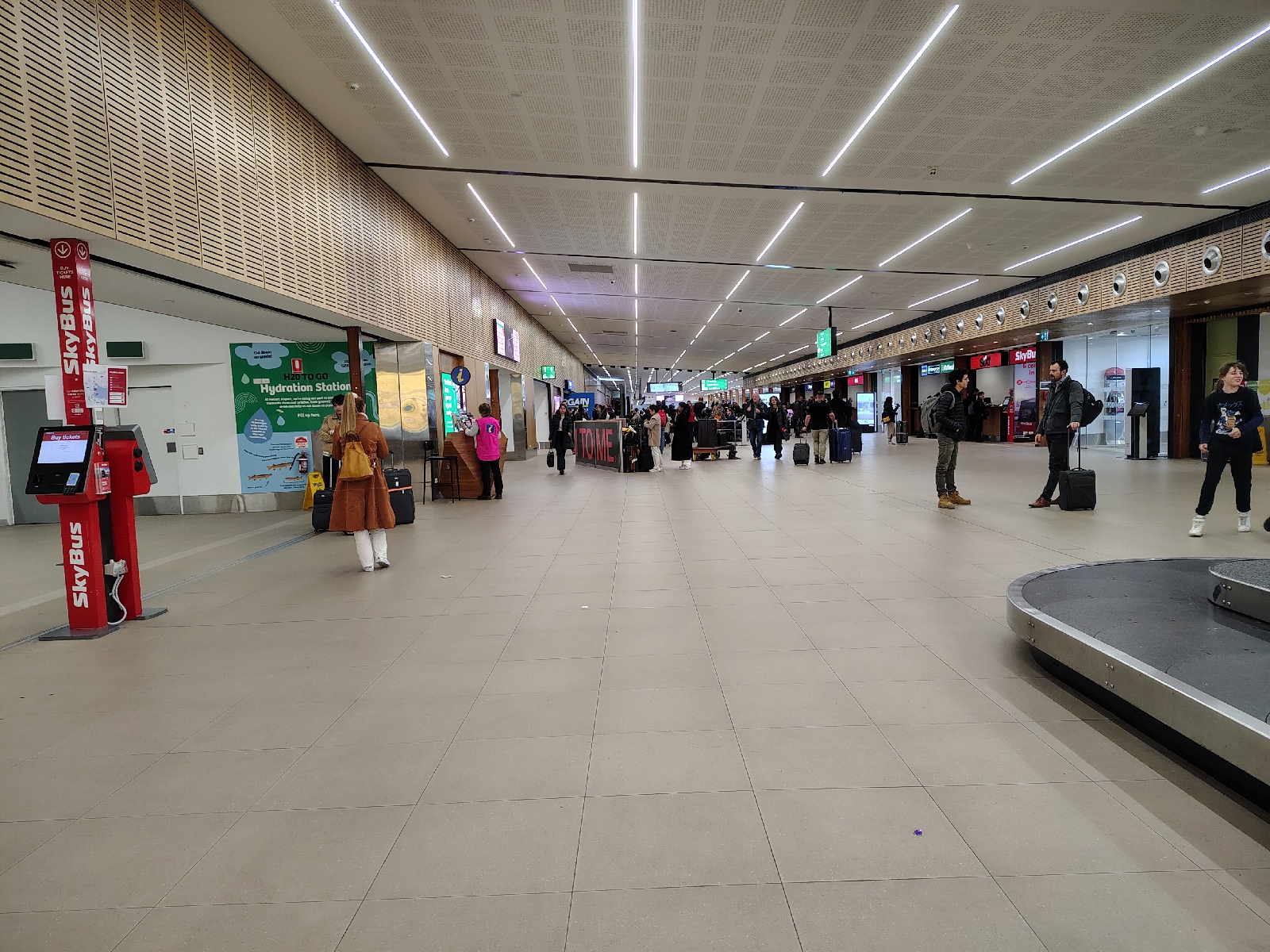
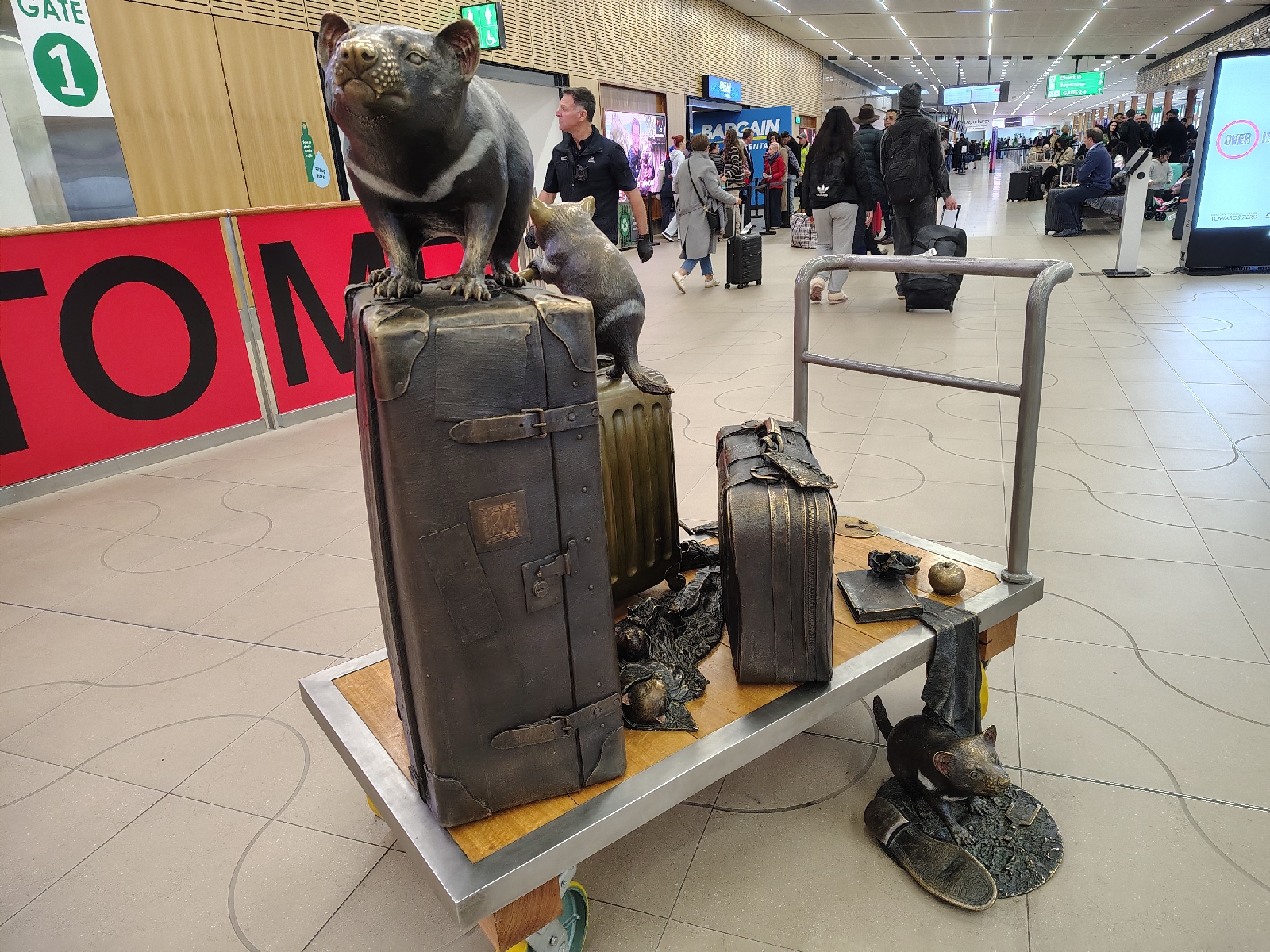
A dawn Jetstar hop from subtropical Brisbane felt like stepping through a portal: by 10 a.m. we were breathing the sharp maritime air of Hobart. Border bio-security was front-of-mind; beagles padded the carousel ready to dob in a wayward mandarin, so we kept our luggage strictly produce-free. Tip: never bring fruit or veg into Tasmania—declare it or bin it.
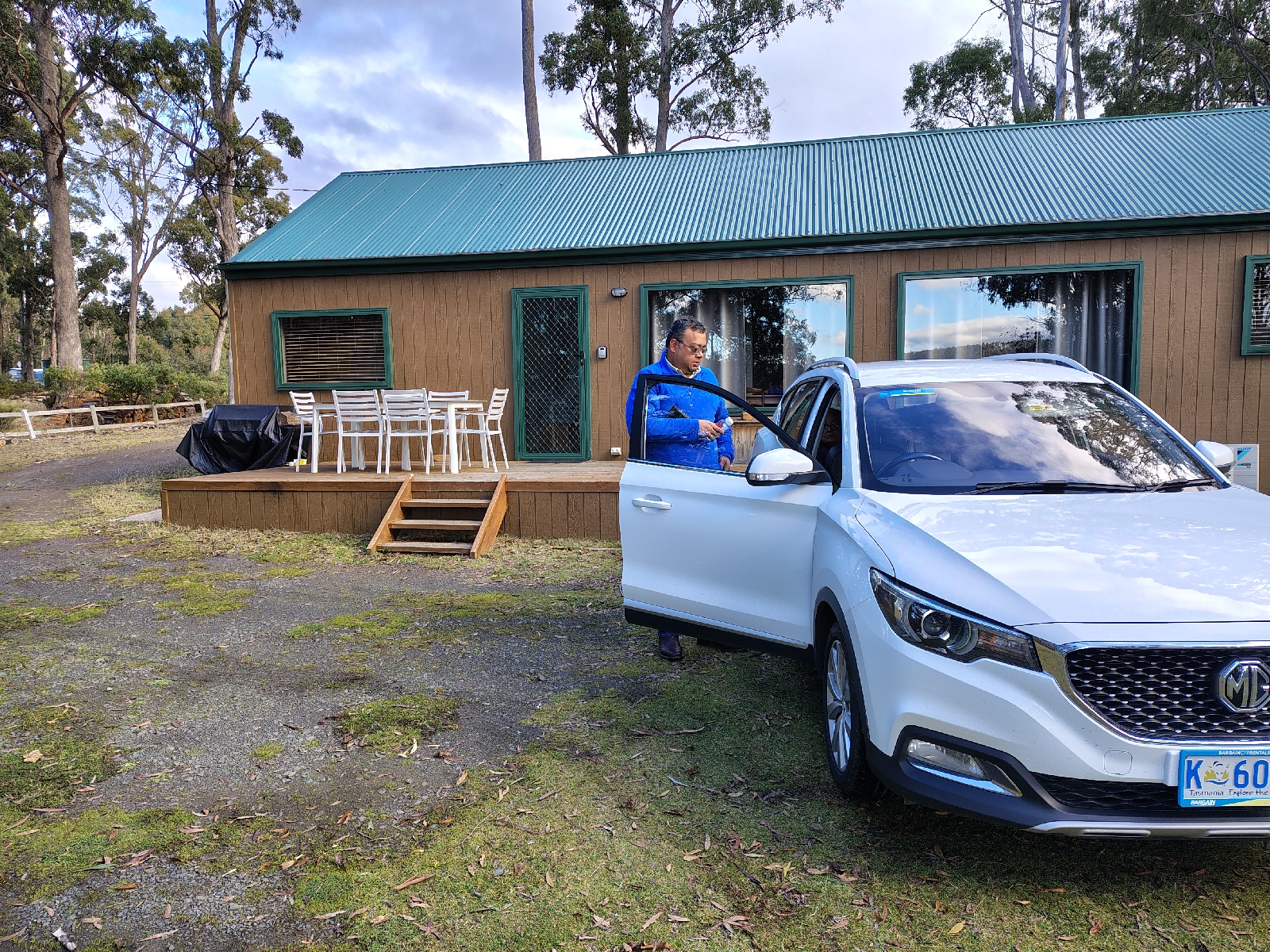
Bargain Car Rentals handed over the keys to our SUV (Hertz and Avis kiosks were doing brisk business beside them). After a pit-stop at Coles for bread, biscuits and eggs—and a guilty-pleasure lunch at KFC—we nosed onto the Lyell Highway (A10) bound for Brady’s Lake, 68 km northwest of Hamilton and roughly 125 km from Hobart airport.
Almost immediately the city fell away to emerald paddocks stitched with split-rail fences. Sheep browsed like scattered cumulus against the vivid winter grass; skeins of mist hung in folds of the Derwent Valley. We dialled the radio to 7HOFM 101.7 FM—Hobart’s oldest commercial station—whose breakfast crew bounced between traffic updates, dad jokes and a string of 80s sing-alongs. Windows fogged from our steaming takeaway coffee; outside, the dashboard read a brisk 9 °C.
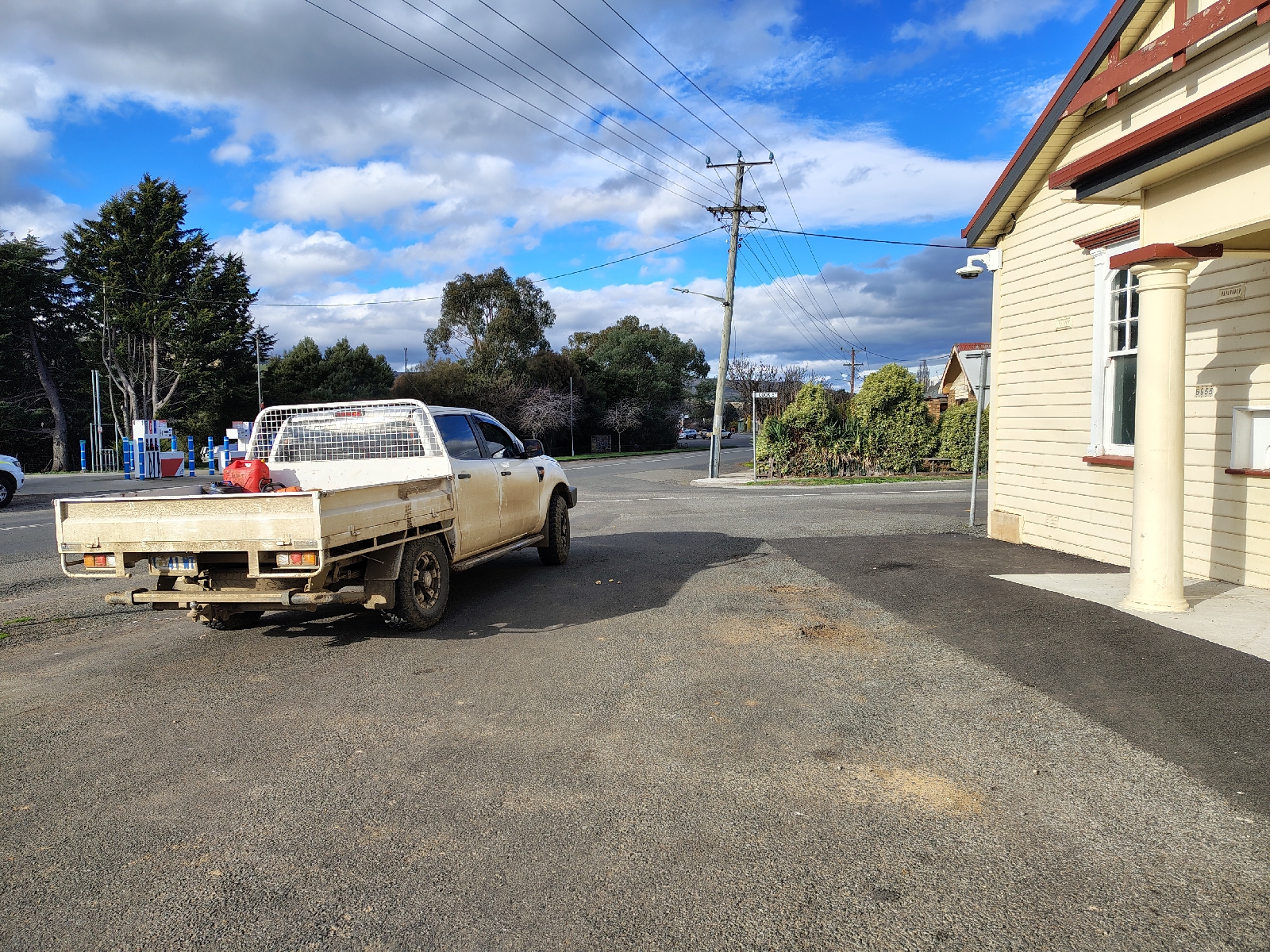
Ninety minutes on, we rolled into the hamlet of Ouse for caffeine and a stretch before tackling the climb. From here the highway kinks north-west, threading between brooding dolerite ridges and the skeletal ash forests of the Central Plateau Conservation Area. Yellow road signs warned of “WALLABIES NEXT 20 km” and “ICE SKID RISK”—they weren’t kidding. Frost ribbons glazed the bitumen in shaded gullies; Anish kept a white-knuckle 80 km/h while 7HOFM segued into Crowded House and weather bulletins that promised “snow showers above 900 metres”.
Past Tarraleah we left the main drag, skirting Lake Binney and braking for the first of many wallabies darting through dusk. At 4:30 p.m.—sun already kissing the treetops—we spotted the hand-painted road sign “Hakuna Matata”: our little cedar-clad haven on Brady’s shore.
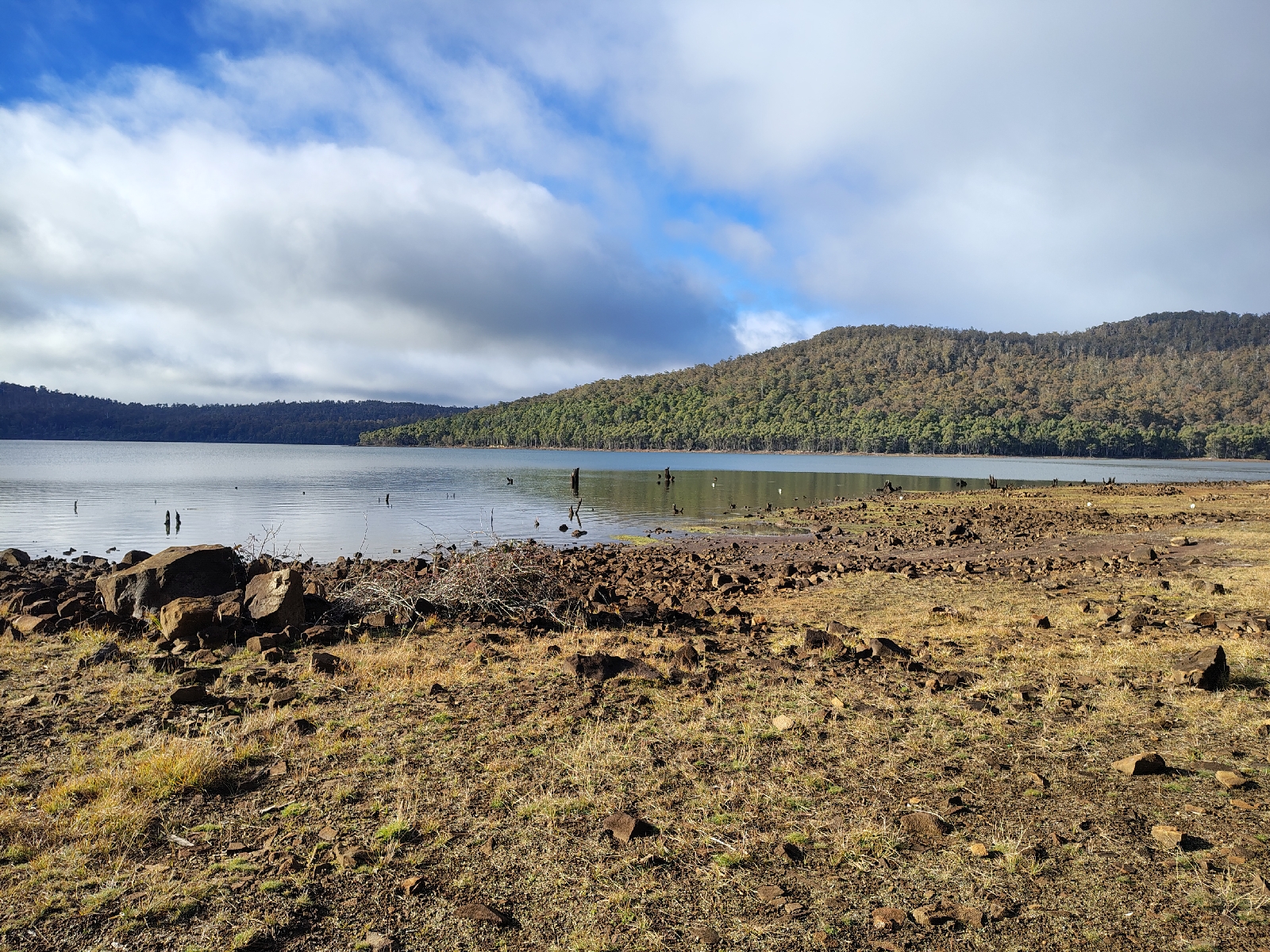
Inside, a crackling log fire thawed our runny noses. The aroma of burning eucalyptus oil and resin lent the living room an old-world warmth electric heaters can’t imitate. Through picture windows the lake spread like pewter, ringed by ghostly stumps left by Hydro-Tasmania’s 1950s inundation. Outside it was 6 °C with an icy breeze; inside, the glow of red coals and the hum of electric under-blankets promised perfect hibernation.
Morning rain drummed softly on the iron roof, pushing wisps of cloud across the lake’s glassy surface. We circled the foreshore on a mossy track strewn with quartz pebbles and pencil pine cones. At ~661 m elevation Bradys sits on a saddle between the Nive River and Bronte Lagoon; the three linked reservoirs form the headworks for Tungatinah Power Station far below.
Even muted by drizzle the landscape dazzled: teal water flecked with black swans, jade eucalypt slopes rising behind tawny tussock meadows, and absolute silence broken only by a ravens’ croak. The absence of neighbours was startling for us Indians accustomed to chai-stall chatter on every corner; here, “crowd” meant a pair of paddlers skimming across the chain of lakes.
Afternoon sent us indoors, where the fire’s amber light danced on Tasmanian oak floorboards. Rain rattled the windows while we dozed under woollen throws and grazed on toast, cheese and ABC evening news—winter hygge Down Under.
Alarms chimed at 04:00. Outside, Orion blazed over the inky water; breath plumed like smoke. The SUV headlights cut a tunnel through the Highlands as Anish eased back onto the highway. In the beams, wallabies, pademelons and an occasional brush-tailed possum bounded like pinballs—an ever-shifting slalom that kept speeds modest. A ghost-white masked owl swooped low, its wings briefly filling the windshield before vanishing.
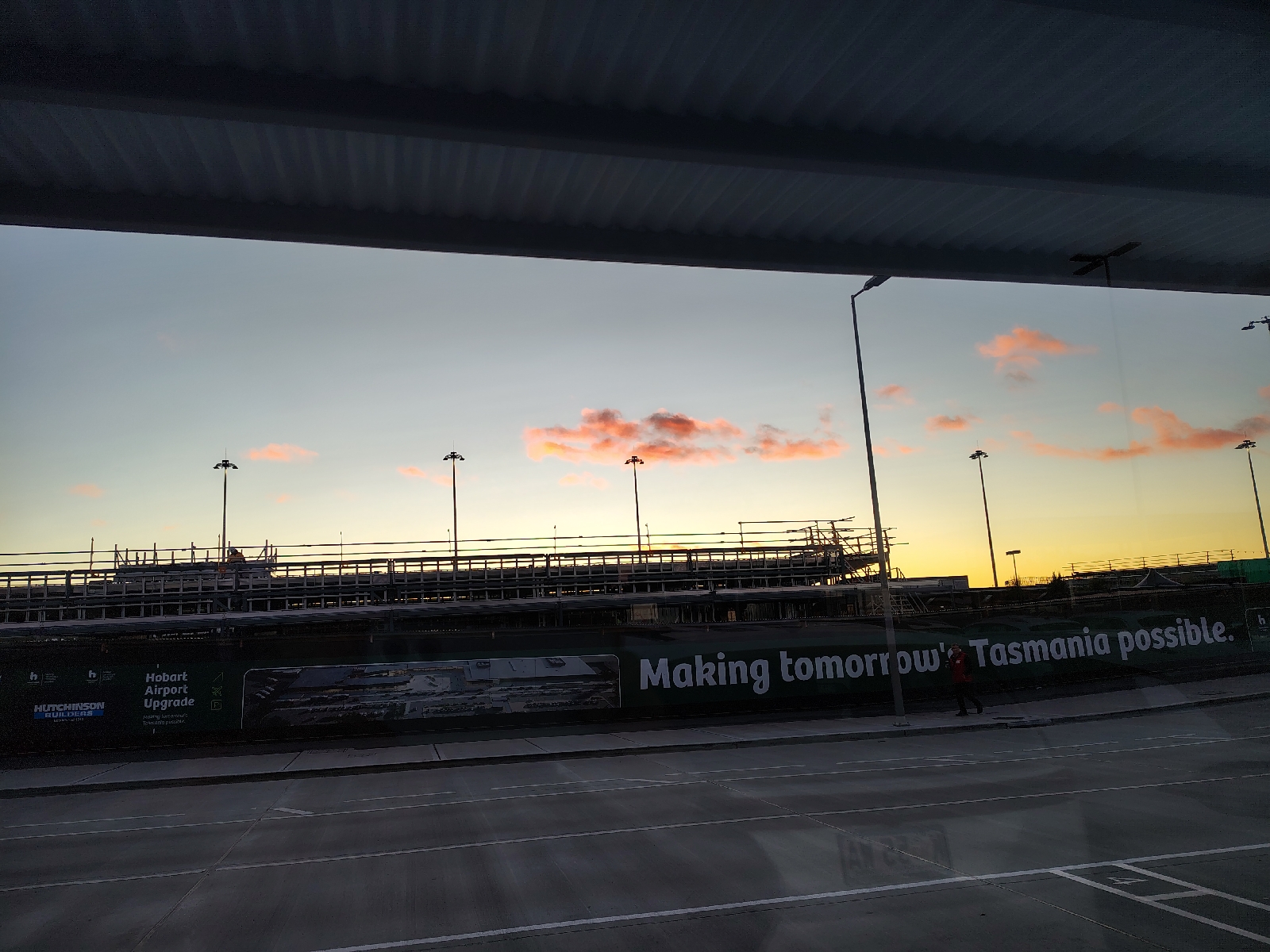
We’d planned another coffee at Ouse, but the lone roadside café’s veranda lights were dark—winter hours, or maybe just Tuesday. Instead we let the radio keep us alert: 7HOFM’s pre-dawn announcer traded calls with long-haul truckies while Taylor Swift and INXS alternated in the playlist. As the first peach glow touched Mount Wellington, Hobart’s lights unfurled below and the airport loomed, country stillness giving way to jet-bridges and boarding calls.
| Feature | Detail |
|---|---|
| Latitude / Longitude | 42° 13′ 48″ S, 146° 29′ 24″ E |
| Elevation | ~661 m (2 169 ft) above sea level |
| Origin | Impounded section of the Nive River, created 1950s for Hydro-Tasmania power scheme |
| Landscape palette | Dolerite hills, dry-sclerophyll eucalypt forest, button-grass plains and glacier-scraped lagoons |
| Wildlife highlights | Platypus in quiet bays; wedge-tailed eagles over the ridges; abundant nocturnal marsupials |
| Human footprint | A string of no-frills shacks and the odd Airbnb—otherwise, an amphitheatre of silence |
Brady’s Lake pairs the raw minimalism of Tasmania’s Central Highlands with the cosy romance of a pot-bellied stove. In three short days we tasted both: broad-sky meadows and silvered peaks by afternoon; wool socks, woodsmoke and family stories by night. The Highlands road may demand caution—black ice, bounding wallabies, and radio banter your only companions—but reach the water before the early winter sunset and you’ll understand why our son chose to stake a claim here. It’s an oasis where Hakuna Matata isn’t just a signpost; it’s a state of mind.
Every human being carries within them an invisible boundary — a silent perimeter set not by society or law, but by the self. It is the subtle edge of the moral compass, unconsciously drawn through values, upbringing, and lived experience. We don’t always notice when we cross it — but when we do, even unknowingly, it often begins to haunt us in ways we never anticipated.
In the bustle of daily life, caught up in work, ambition, and survival, we often overlook the quiet needs of those around us. Our routines make us efficient, but not always empathetic. There may come a day when we give money to a stranger who is starving — a gesture of kindness — but in that moment, we might suddenly remember the time we ignored a friend in distress, or failed to support an ageing relative. The guilt that arises isn't about the current act of charity; it stems from a deeper regret — of having once missed a chance to care when it truly mattered.
Such moments of reflection don’t follow a schedule. They arrive uninvited, sometimes years later, triggered by something as simple as a street scene or a film. One such film, The Father, left a profound impact on me. Anthony Hopkins, in a hauntingly beautiful performance, portrays an elderly man slipping into the fog of dementia. His daughter, played by Olivia Colman, struggles to care for him — torn between love, exhaustion, and the hard realities of life. What the film so brilliantly captures is not just the disintegration of memory, but the quiet moral conflict of the caregiver. The guilt of not being able to do enough. The regret of losing patience. The ache of witnessing a loved one fade away, and the helplessness of watching yourself withdraw emotionally in response.
This story is not uncommon. Many aging parents, who once sacrificed everything for their children, now find themselves alone — sometimes placed in old age homes. The decision may be driven by practical constraints, but later, when life slows down, it can stir deep guilt. Memories return unbidden: of their silent sacrifices, the uncomplaining way they gave up comforts for our sake, the joy they felt in our smallest successes. And we wonder — could we not have done more?
These aren’t isolated emotions. They are shared by many who, in their earnest chase of personal goals, overlooked the human connections that truly mattered. Yet, guilt, for all its weight, is not entirely a curse. It is the soul’s way of nudging us toward reflection. It makes us human. It tells us that our conscience is still alive — tender, questioning, and capable of growth.
Conclusion
Life is noisy, and its demands never truly end. But somewhere between the appointments and obligations, we must pause to check in — not just with others, but with ourselves. The invisible boundary of our moral compass, though unseen, is felt. When we cross it, something inside us shifts. And while guilt may come later, like an echo from the past, it also offers a second chance — to reconnect, to redeem, and to realign.
Let us strive to be present, now — while there is still time. Let us not wait for regret to remind us of our humanity.